

Ask any graduate of a top US university what year changed them the most, and the answer is almost always the same. The first one.
Not because the courses were the hardest or the grades the most important, but because the first year is where everything shifts. It is where you go from being a student to becoming a thinker, a collaborator, a builder, and a person with a genuine sense of what you want from the world.
For ambitious students in India aiming for schools like MIT, Yale, Stanford, or Cornell, understanding what makes that first year so powerful is not just an interesting idea. It is practically useful.
Because the universities that transform students most profoundly are looking for applicants who already understand and are ready for that kind of growth.
Here is what actually happens in Year One at a top US university that makes it unlike anything else.
1. You Encounter an Academic Culture That Challenges How You Think, Not Just What You Know

The most immediate and lasting shift for most students in their first year at a top US university is not about what they learn. It is about how they are asked to think.
MIT offers an incredible learning environment filled with innovation, collaboration, and hands-on opportunities, with a diverse community and access to world-class professors. Students consistently describe the intellectual culture as something they were simply not prepared for in the best possible way.
At schools like Yale, students report being struck by the emphasis on seminar-based discussion, in which professors do not deliver knowledge so much as provoke questions. Yale University offers a transformative experience marked by intense intellectual curiosity and a collaborative and supportive atmosphere.
This shift from passive learning to active intellectual participation occurs in the first few weeks and shapes the entire university experience that follows.
Berkeley’s chancellor has described the university’s mission as going far beyond the classic curriculum, not just teaching what to think or how to think, but also how to live with greater agency, a philosophy that comes through most powerfully in the first year when students are encountering the full breadth of what their institution offers for the first time.
2. Faculty Mentorship Opens Doors You Did Not Know Existed
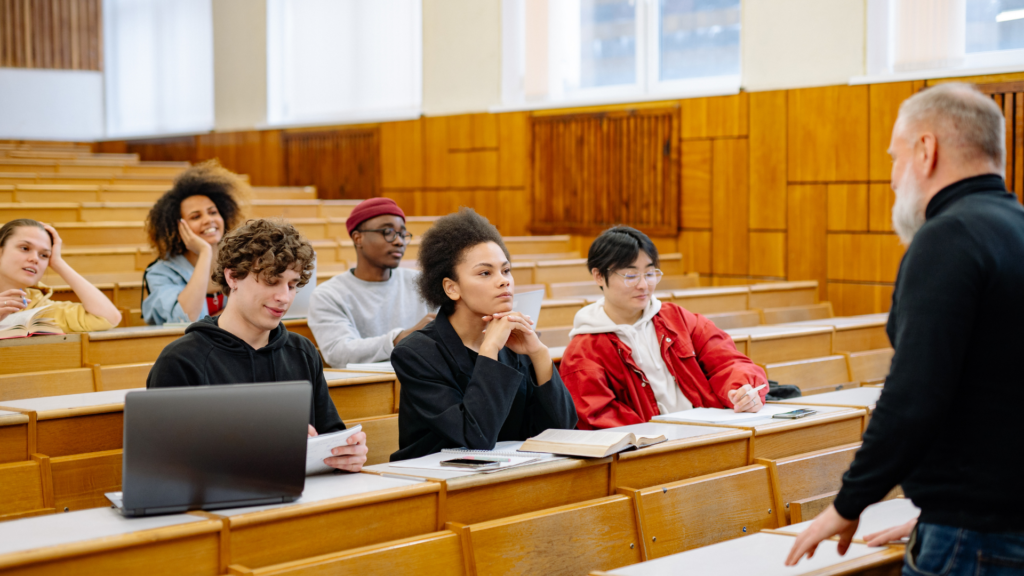
One of the most distinctive features of a top US university education, particularly in the first year, is the access students have to faculty who are genuinely invested in their development. This is not mentorship as a formality. It is a relationship that shapes careers.
In the Gallup-Purdue Index, a national sample of over 30,000 college graduates found that those who felt their professors cared for them personally displayed higher work engagement, better subjective well-being, and stronger beliefs that their college education was worth the cost.
The same study found that positive interactions with university faculty and staff instill a sense of belonging and foster students’ career identities in ways that last well beyond graduation.
The mentor role in higher education can be fulfilled by different actors, including faculty members such as campus advisors, research leaders, professors, and directors of studies, and this mentoring relationship has been linked to increased identity development and the building of communities of practice.
For Indian students coming from large classroom environments where one-on-one faculty interaction is rare, this dimension of the US university experience is often one of the most surprising and meaningful. The relationships you form in your first year with professors and research supervisors can open doors to research opportunities, recommendations, and career networks that follow you for decades.
3. Research Access in Year One Changes What You Think You Are Capable Of

At most universities worldwide, undergraduate research is typically conducted in the final year, if at all. At top US universities, first-year students are invited into research from day one, and this early exposure is one of the most genuinely transformative aspects of the experience.
Undergraduate research enhances the educational experience of science undergraduates, attracts and retains talented students to careers in science, and serves as a pathway into research careers, with most participants reporting gains across 20 potential areas of benefit.
The impact goes beyond subject knowledge. Students who engage in research in their first year develop analytical independence, problem-solving under uncertainty, and a kind of intellectual confidence that is almost impossible to build in a classroom.
Evidence consistently supports the idea that research programs transform undergraduates by clarifying their interest in research and encouraging those who had not previously considered graduate studies to pursue them. For first-year students still figuring out what they want to do with their degree, being placed in a real research environment alongside faculty and graduate students is one of the fastest ways to gain that clarity.
Programs like the First Year Research Experience (FYRE) at the University of Nebraska-Lincoln are emblematic of how seriously top US institutions take this. But the culture of early research access is most pronounced at schools like MIT, Stanford, Harvard, and Cornell, where undergraduate research is woven into the academic fabric from orientation week onwards.
4. The Diversity of Your Peers Expands Your World View Permanently

There is something that happens when you spend a year living, studying, and debating alongside people from fifty different countries, twenty different disciplines, and radically different life experiences. It is not something you can fully prepare for, and it does not happen anywhere else quite like it at a top US university.
Fewer than 1% of Americans attend the twelve Ivy-Plus colleges, yet they account for over 13% of those in the top 0.1% of earners, a quarter of US Senators, half of all Rhodes scholars, and three-fourths of Supreme Court justices appointed in the last half-century. These institutions do not merely select talented students; they also directly change their life trajectories.
A significant part of that trajectory change happens through peer interaction. The student sitting next to you in your first-year seminar might be a robotics prodigy from South Korea, a first-generation college student from rural Texas, or the child of diplomats who grew up across three continents.
These interactions do not just broaden your perspective. They challenge the assumptions you did not know you held, sharpen your thinking, and expand your sense of what is possible.
In 2026, with rising mental health concerns and hybrid learning legacies, the National Survey of Student Engagement data shows that personalized learning paths are increasing deep student engagement by around 30%, and the diversity of campus communities is central to that engagement.
5. Wellbeing Is Treated as a Core Academic Priority, Not an Afterthought

One of the things that most clearly distinguishes top US universities from their global counterparts in 2026 is their intentional investment in student well-being. This is not just about counseling services. It is a philosophy that treats your mental and emotional health as inseparable from your academic success.
Building connections with peers can alleviate loneliness and foster a sense of belonging on campus. Student-led groups can take many forms and focus on a range of interests, including academic, athletic, social, religious and spiritual affiliation, community service, and professional interests, and these groups serve as venues to reduce stress and develop new skills.
Campus wellbeing initiatives in 2026 include preventive education focused on mental health literacy and coping mechanisms, technology-based solutions such as virtual therapy platforms and mental health apps, and inclusive, diverse support for different student populations.
Schools like Duke, the University of Virginia, and Washington University in St. Louis have expanded their counseling staff, introduced peer support programs, and embedded well-being into the curriculum in ways that were unimaginable a decade ago.
For international students in particular, this matters enormously. For many students, university is their first experience of living away from home, which can lead to feelings of isolation and loneliness. Navigating new social networks and adjusting to diverse cultural environments can be overwhelming, particularly for international students who may face additional language barriers, cultural differences, and homesickness.
The best US universities have built support systems that anticipate these challenges and meet students where they are.
The First Year Is a Foundation, Not Just a Starting Point
What makes the first year at a top US university truly transformative is not any single one of these five things. It is the combination of all of them happening at once, in an environment that is deliberately designed to push you beyond what you thought your limits were.
The students who thrive most are those who arrive ready for this kind of growth, who have already developed the intellectual curiosity, resilience, and sense of direction that allow them to take full advantage of everything around them from day one.
That readiness does not happen overnight. It is built through years of deliberate choices, meaningful experiences, and a clear understanding of who you are and what you want to contribute to the world.
At Essai, helping students build that readiness is exactly what we do. From profile development in Grade 10 to application essays that communicate genuine direction and depth, our team works with students at every stage of the journey. Visit essai.in/consult to start building the kind of profile that gets you into a first year worth writing home about.
Essai has guided hundreds of students to offers at top US and UK universities since 2014. Our personalized, long-term approach ensures every student is not just admitted, but genuinely prepared for the experience ahead.