
Picture two students preparing for the same Ivy League application.
One has been told that anything below a perfect 1600 is pointless. The other has been told that scores no longer matter at all. Both are working from outdated advice, and the real picture is more encouraging than either has heard.
The confusion is understandable. In just a few years, the Ivy League has moved from test-optional to test-required across the board, and plenty of online advice still dates from the earlier era. For ambitious students in India, that is an opportunity, because every policy is now published, specific, and easy to check.
Here are eight myths about SAT scores and Ivy League admissions, and what the schools themselves say. Keep a tally of how many you believed.
Myth 1: Ivy League Schools Are Still Test-Optional
The reality: six of the eight now require test results. Harvard, Yale, Dartmouth, Brown, Cornell and Penn have all brought testing back, and the remaining two are only a cycle away. Princeton stays test-optional for fall 2027 entry but will require SAT or ACT scores for fall 2028 entry.
Columbia, also optional this cycle, announced on 12 June 2026 that it will do the same, becoming the last Ivy to announce a return to required testing. Your move: if you are in Grade 11 today, plan as though every Ivy will ask for a score.
Myth 2: A Perfect Score Guarantees an Offer

The reality: a score opens the door, but the rest of your file walks you through it. Scale matters here. Harvard admitted 2,037 of 55,104 applicants to the Class of 2030, an admit rate of roughly 3.7 percent.
In a pool that strong, grades, essays, recommendations, and a clear sense of direction help decide who is chosen. Dartmouth describes a score as one data point among many and says testing is never the primary factor. A great score starts a strong application, not the finish.
Myth 3: You Need a 1600
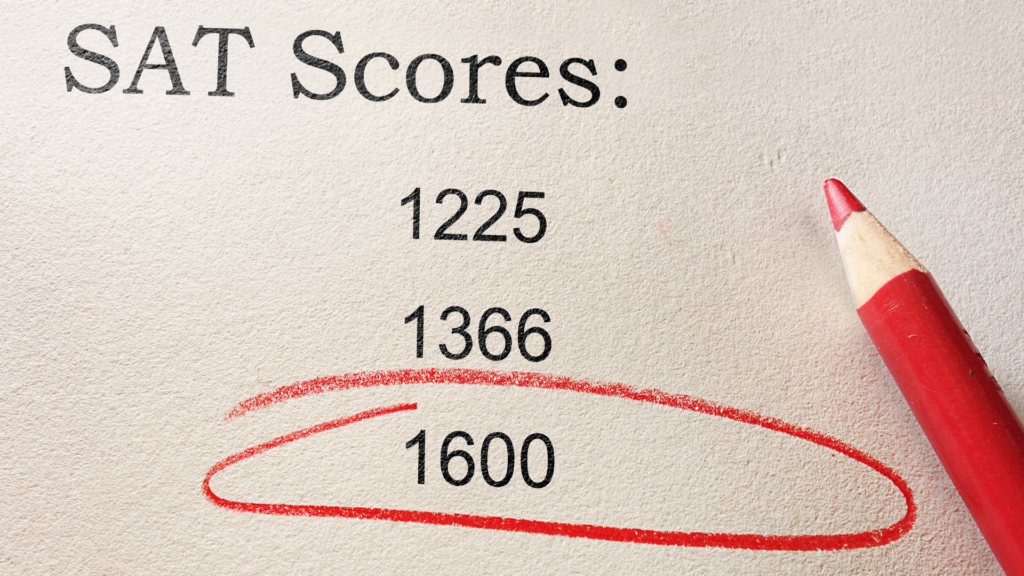
The reality: perfection is not the price of entry. Princeton states that there are no minimum test score requirements, and so does Columbia. Scores are very high, but not flawless: the median SAT submitted by Columbia’s fall 2024 cohort was 1540, which means half of those submitters scored at or below it.
Dartmouth adds a useful idea. Its announcement notes that students with strong scores in their local context often went test-optional when those scores fell below its typical range, even though the scores would have strengthened their applications. Aim high, but never let a few points keep you from applying.
Myth 4: Test-Optional Means Scores Do Not Matter

The reality: test-optional never meant test-blind. Princeton remains optional for now, yet its review of five years of data found that academic performance was stronger for students who chose to submit scores.
A study of Ivy-Plus colleges by Opportunity Insights found that students admitted without submitting scores earned lower college GPAs, with academic records equivalent to an SAT score of roughly 1300. Treat this final test-optional cycle at Princeton and Columbia as a decision, not a loophole. If your score is strong for your context, send it.
Myth 5: Scores Are Now the Only Thing That Matters
The reality: tests are back because they are useful, not because they are everything. The same study found that standardised scores are four times more predictive of academic achievement in college than high school grades, and Brown, Dartmouth, Harvard, and Yale were among the schools that cited it when reinstating testing.
Yet admissions teams still read the whole file. Yale describes scores as one component of its holistic evaluation, and Dartmouth says testing works alongside your school report and recommendations. Think of your score as proof of readiness and the rest of your application as proof of who you are.
Myth 6: Retaking the SAT Hurts You

The reality: retakes are built into the system. Yale lets you report super-scored results, meaning your highest section scores across several sittings. Penn combines your best section scores across multiple tests, and Dartmouth superscores regardless of test dates or platform.
Harvard does not create superscores, but it notes your highest section scores across SAT dates and your strongest ACT sitting. Princeton allows Score Choice, but does not superscore between paper and digital tests. Details differ by school, so check each one. Your move: plan two sittings in Grade 11.
Myth 7: Ivy League Schools Prefer the SAT to the ACT

The reality: neither test has an edge. Yale’s admissions office does not prefer scores from one exam over the other, and Dartmouth says it has no preference for either test. Take a full-length practice test of each, compare your results, and commit to the one where you score higher.
Then spend your preparation time on that single test. Your move: block one weekend for both diagnostic papers before you choose.
Myth 8: International Students Can Skip the SAT or Swap In Board Exams

The reality: it depends on the school, and the safest plan is to sit the SAT or ACT. Harvard says its process is the same for all applicants, regardless of nationality, and it requires the SAT or ACT.
It accepts AP, IB, A-Level, or national leaving exam results only in exceptional cases, such as when a student faces challenges in paying for or accessing a test site, and English tests like the TOEFL, IELTS, and Duolingo cannot substitute. Yale also requires ACT or SAT scores, while Penn applies its requirement to international applicants too, with a hardship waiver for those who cannot test. Dartmouth is more flexible.
Students at schools outside the US can meet its requirement in one of five ways, and its 2024 announcement names the SAT, ACT, three AP exams, and IB, A-level or equivalent national exam results. For applicants in India, one strong sitting keeps your options open at every school on your list.
Your Next Move: Turn the Myths Into a Plan
Count how many myths you believed. Two or fewer, and you are well informed. Three or more, and you have just saved yourself months of misdirected effort.
Here is a simple plan. First, read the official testing page of every school on your list, because policies keep changing. Second, book your first sitting early.
The College Board calendar lists the same 2026-27 dates for international and US students, including 5 December 2026 and 6 March, 1 May, and 5 June 2027. Leave room for a retake. Third, remember that a score is one chapter of your story, not the whole book.
At Essai, profile building pairs academic support, including SAT and ACT preparation, with research, internships, and long-term extracurriculars, and our director, a Harvard graduate, wrote Pearson’s Guide to the SAT.
Book a consultation to build a testing and application plan that fits your profile.