The Discover Winter School in Gender Studies presents a month-long virtual course, to acquaint young researchers with the foundational concepts, theoretical histories, and critical debates within the intersectional discipline of Gender Studies. The program strives to promote critical thinking in the assessment of gendered frameworks in domains including international relations, economics, film studies, and more, cultivating an atmosphere of scholarly advancement centered around diverse facets of gender in South Asian contexts.
All participants will be offered a certificate of completion at the end of the program, and will be provided the opportunity to connect with fellow participants to foster further discussion.
The Winter School in Gender Studies offers a curriculum designed to enhance student learning experience through interactive assessments and group activities, under the guidance of cutting-edge academics. The virtual format of the program enables students to connect with our educators from across the world, offering their expertise in multiple domains in Gender Studies.
The Winter School will be held from 5th January to 30th January 2026, and sessions will be scheduled between 5-6.30 pm IST on each day. All sessions are virtual.
The program will be split into five 1.5 hour lectures over the course of 1 month, accompanied by short quizzes, tutorial discussions, and short written assessments.
The program will cover fundamental concepts and critical approaches to gendered frameworks of analysis in a variety of disciplines, with session titles listed below. Further information on necessary readings and prescribed texts will be provided upon registration.
The Winter School is open to young students (aged 15 and above), who are presently enrolled at the high-school or undergraduate level. Students who have graduated within the last year are also permitted to register.
To apply, simply fill out our Application Form below, and we will promptly revert to you. Please note that there are only limited seats in the program, and your application will be selected based on your response.
The cost to attend the Discover Winter School is INR 3,500/- + GST.
We also offer an early bird discounted cost of INR 2,500/- if you register before December 15th, 2025.

is an intellectual historian of modern South Asia. She received her doctorate in Global and Imperial History from the University of Oxford in May 2025.
Her research interests include the history of the British Empire in India, decolonisation, and intellectual debates on representational democracy, federalism, and popular sovereignty.
Her graduate studies at Oxford were supported by the Felix Scholarship. She has published in journals like Global Intellectual History and South Asia: Journal of South Asian Studies.

is an Assistant Professor (Public Policy) at the National Law School of India University, Bengaluru. Her research interests lie in the fields of technology policy, public perceptions about new technologies, and policy design.
She is a passionate advocate for mental wellness among graduate students and has been a peer supporter for students at National University of Singapore.
Before pursuing her PhD, she worked at the Indian Council for Research on International Economics Relations (ICRIER) and Pahle India Foundation as Research Associate and at the Asian Development Bank as a consultant.

is a PhD researcher at the Karlsruhe Institute of Technology, focusing on disability and AI.
With an MA in Social Work from the Tata Institute of Social Sciences, Mumbai, she has extensive experience examining gender dynamics across technology, agriculture, work, and mental health.
Her research sits at the intersection of technology, equity, and social justice.

is an Analyst at the National Institute for Health and Care Research, where she contributes to projects that demonstrate the impact of clinical research across multiple domains.
Her interests include technology, sustainability, and their integration with clinical research. She brings experience from the public sector, private industry, and academia.
Anusha holds a Bachelor’s degree from Lady Shri Ram College and a Master’s degree in International Development from the University of Oxford.
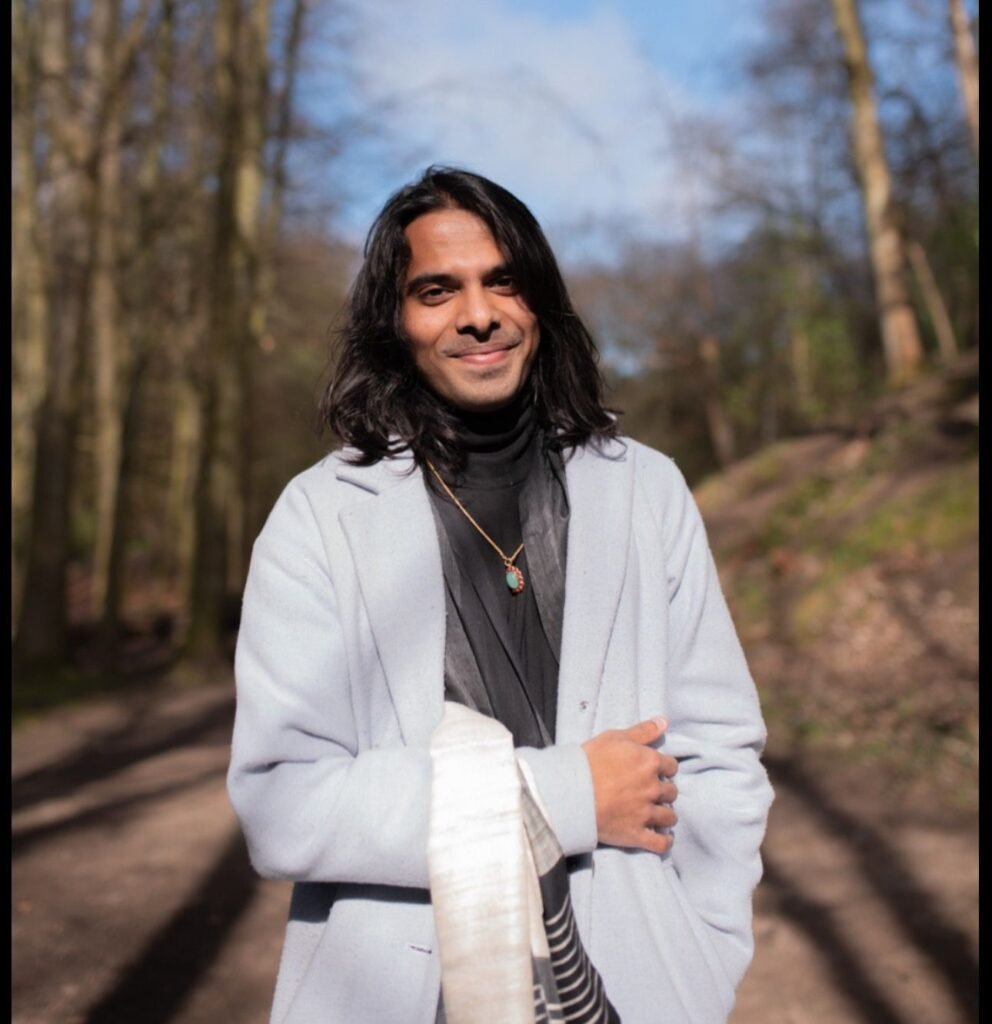
is the Head of Discover and an ESRC Fellow, Associate Fellow of the HEA, and a doctoral researcher at the University of St Andrews.
Their research studies the conditions in which care-based political movements in India can sustain.
Q has previously worked on disability inclusion with the United Nations ESCAP, in leadership roles with multiple research centers in New Delhi, and graduated Trinity College Dublin with an MPhil in International Peace Studies, where they received the James O’ Haire Prize.
The Winter School in Gender Studies will consist of 5 interactive lectures to critically engage with gender in our everyday lives.
Session 0: Introduction to Gender Studies: Key Concepts, Theories, Histories
Why is it important to study and have a critical understanding of gender in our everyday lives? How does it manifest in politics, market economies, households, conflicts, governments, and knowledge systems? This lecture will introduce you to key theories and concepts in Gender Studies, from questions of history and biological essentialism to reimaginations of the gender binary. It engages with historical debates in gender and sexuality, and reviews academic discourses surrounding intersectionality, culture wars, caste, religion, economics, and politics.
The lecture will question modern discourses on gender and trans inclusion, alongside reviewing cases of women and queer rights movements across the past decades (and centuries, even)! From Judith Butler to Andrea Dworkin, and Gayatri Spivak and Sharmila Rege to Ratna Kapur and Iris Marion Young, we will attempt to question what it means to live embodied lives, and how care, joy, and grief have accompanied questions of gender across space and time.
Session 1: Gender in history: The social construction of identity, and ideas of equality
This workshop offers a rigorous examination of gender as a historically constituted category, tracing its formation and transformation from the colonial period to the present. While centred on gender questions in modern India, the workshop adopts a comparative and thematic framework, moving fluidly across time and space to illuminate the broader intellectual, political, and cultural contexts in which gendered identities and hierarchies were produced, contested, and reconfigured.
Through a combination of close textual readings, case studies, and theoretical debates, participants will examine how gender has operated simultaneously as a mode of identity, a social institution, a field of power, and a site of political struggle. A core focus of the workshop is the interrogation of major debates on social reform, women’s education, the emergence of women’s organisations, and the gendered dynamics of national and anti-colonial movements.
We will analyse how women’s labour, both paid and unpaid, structured colonial and postcolonial economies; how popular culture shaped representations of femininity and masculinity; and how shifting regimes of sexuality and bodily regulation were integral to the governance of both colonial subjects and modern citizens. By situating gender within global debates on equality, identity, and power, the workshop aims to equip participants with analytical tools to critically examine both historical narratives and contemporary struggles over gender justice.
Session 2: Gender bias in AI
This session will introduce students to the idea that AI systems learn from data created by humans—and therefore can sometimes adopt human biases, including gender bias. How does that happen? Through real-world examples, students will explore how everyday technologies such as voice assistants, chatbots, facial recognition tools may unintentionally reinforce stereotypes. The goal is to help students understand that AI is not neutral; it reflects the values and assumptions present in society.
We will begin by unpacking what “gender bias” means in simple, relatable terms. Students will learn how biased training data, skewed representation, or one-sided design teams can cause AI systems to behave unfairly—for example, recommending certain jobs only to men, or failing to recognize women’s faces well. These examples will help students see how technology affects real people and why fairness is an important part of AI design. Are AI developers and governments doing anything about it? We will also touch on some tools and regulatory approaches to overcome bias.
The session will then guide students to think critically about the technologies like various large language models (LLMs) they use every day. Who designed them? Who are they meant for? Who might be left out? By describing cases of gender bias in the use of AI and activities, students will see how what can be done to make technologies more inclusive in the future.The objective is not only to teach them about bias in the use of AI while empowering them to question, critique, and improve the understanding of digital world.
Session 3: Gender and Intersectionality
This workshop will begin by tracing the historical development of intersectionality as a theoretical concept and research paradigm rooted in Black feminist traditions and broader feminist thought. It will then situate the concept’s evolution within global contexts, with particular attention to its relevance and applications in the South Asian context.
Participants will also engage with contemporary approaches to intersectional research to examine the potential of intersectionality as theory, method, and activism to catalyse social change and address inequities.
Session 4: The Gender Gap in Tech: Design, Access, and Power
Who gets to create technology, and why does it matter? This session examines the underrepresentation of women and gender minorities in tech fields and the real-world consequences of gendered design – from medical devices tested primarily on men to social media platforms that enable gender-based violence.
Students will learn to critically analyze technology through a gender lens and consider their own role in creating more equitable innovation.
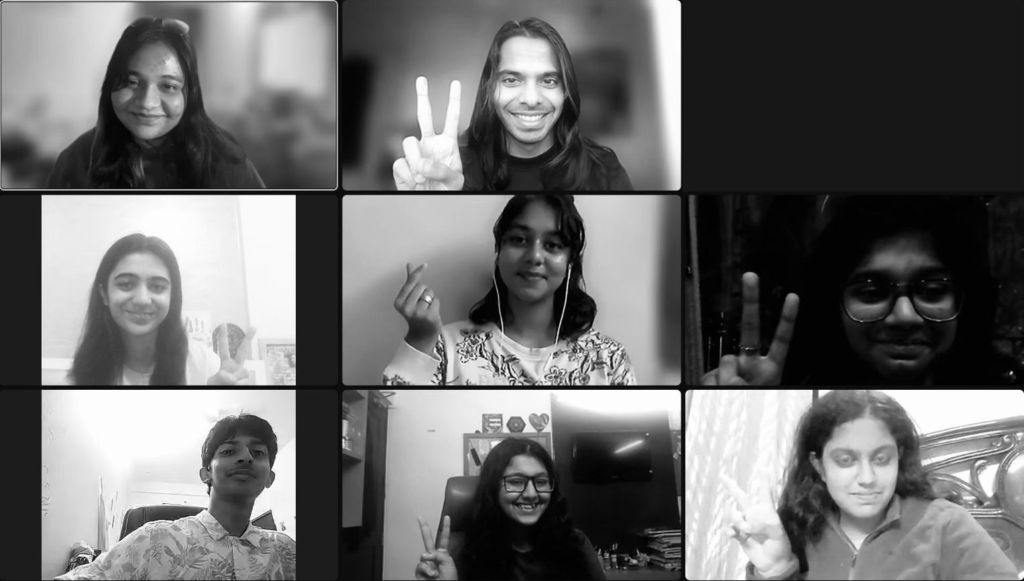
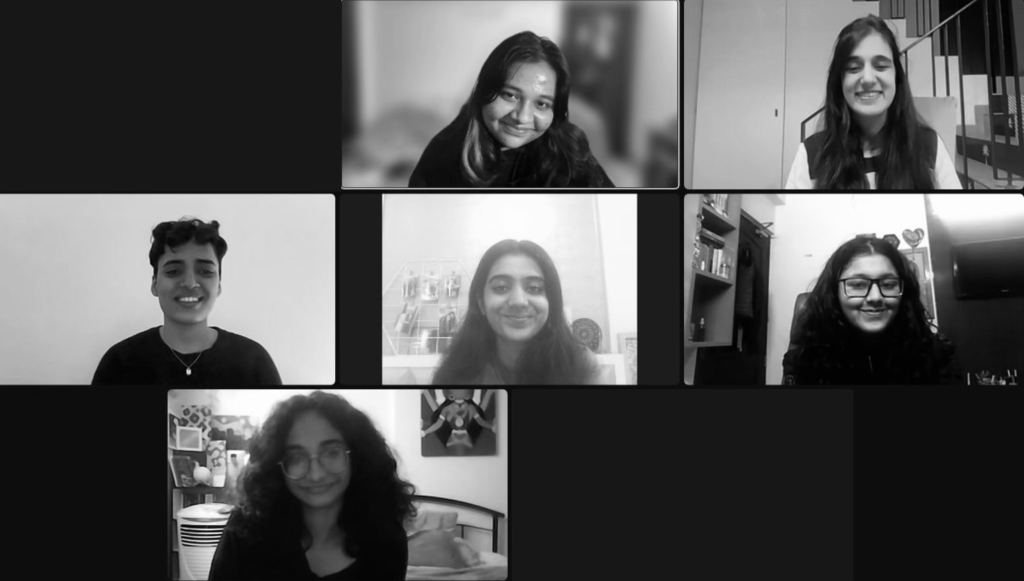
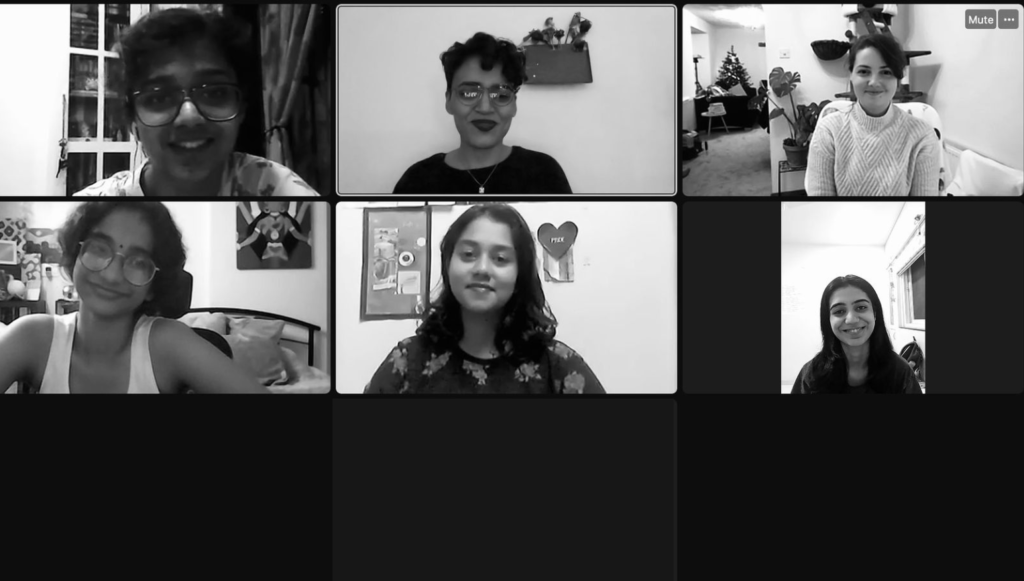

“I’ve joined the course owing to my passion for unraveling the intersections of gender expression and politics.
Excited to connect with brilliant minds and deepen my understanding.”
“I’m excited to be learning about gender under the guidance of some of the best lecturers in the field of gender studies. I look forward to being enriched with more knowledge about gendered roles in society and how it plays along with major events like colonization in the South Asian region.”

In case of escalations, please contact q@essai.in
If you are an academic who is interested in mentoring students with us, please refer to the recruitment page here.