

Among the eight Ivy League universities, Cornell occupies a position that is genuinely unlike any other.
It is simultaneously the largest, the most academically diverse, and the most accessible a combination that makes it a compelling target for students who want the full weight of an Ivy League education without the narrow admissions funnel that defines most of its peers.
Cornell was founded in 1865 on a deliberately radical principle. Ezra Cornell, the university’s co-founder, declared his intention to found an institution where anyone can study any subject.
That founding philosophy has shaped Cornell’s identity for over a century and a half, and it remains embedded in the structure, culture, and admissions approach of the university today.
For ambitious students in India and around the world, understanding what makes Cornell different is not just intellectually interesting. It is practically useful.
Here are eight features that set it apart.
1. The Highest Acceptance Rate in the Ivy League
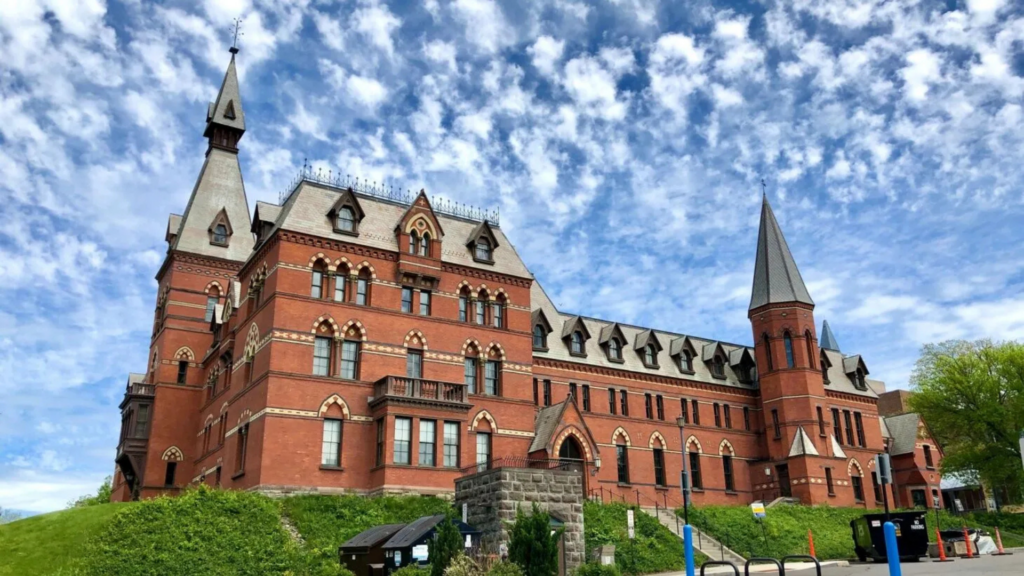
Cornell consistently has the highest acceptance rate of any Ivy League school. For the Class of 2029, Cornell admitted 5,824 students with a published acceptance rate of 7.9 percent.
Cornell and Dartmouth remain in the six to seven percent range, making them relatively more accessible among Ivies, and Cornell’s Early Decision acceptance rate of 18.8 percent means that students who apply early to Cornell and treat it as a genuine first choice have a meaningfully stronger statistical position than those who wait for Regular Decision.
It is important to be clear about what this means. Cornell is not easy to get into. The university rejects more than 92 percent of applicants despite its specialised programme appeal, and competition is particularly fierce for engineering and business programmes.
But in a landscape where Harvard admits 3.59 percent and Columbia admits 3.85 percent, a 7.9 percent acceptance rate represents a genuinely meaningful difference in admissions probability for a well-prepared applicant.
For students building their US university list, Cornell is one of the strongest targets for a student with an excellent academic profile who wants a realistic shot at an Ivy League offer.
2. Seven Undergraduate Colleges With Separate Admissions

Cornell’s most strategically important feature for applicants is one that most other Ivy League schools do not offer: seven distinct undergraduate colleges, each with its own admissions process, acceptance rates, academic culture, and programme focus.
Cornell’s eight admitting undergraduate colleges and schools offer more than 4,000 courses across 100 academic departments. The colleges include the College of Arts and Sciences, the Cornell David A.
Duffield College of Engineering, the College of Agriculture and Life Sciences, the College of Architecture Art and Planning, the College of Human Ecology, the School of Industrial and Labor Relations, the Dyson School of Applied Economics and Management, and the Cornell Ann S. Bowers College of Computing and Information Science.
Unlike most Ivy League schools that have a single admissions pool, Cornell has seven undergraduate colleges, each with its own admissions criteria and academic culture. This gives applicants more strategic options; the key is choosing the college that best matches your profile, not the one that sounds most prestigious.
A student applying to Cornell who understands this structure and aligns their application with the right college is significantly better positioned than one who applies without that understanding.
3. A Land-Grant Public Mission Inside an Ivy League Institution
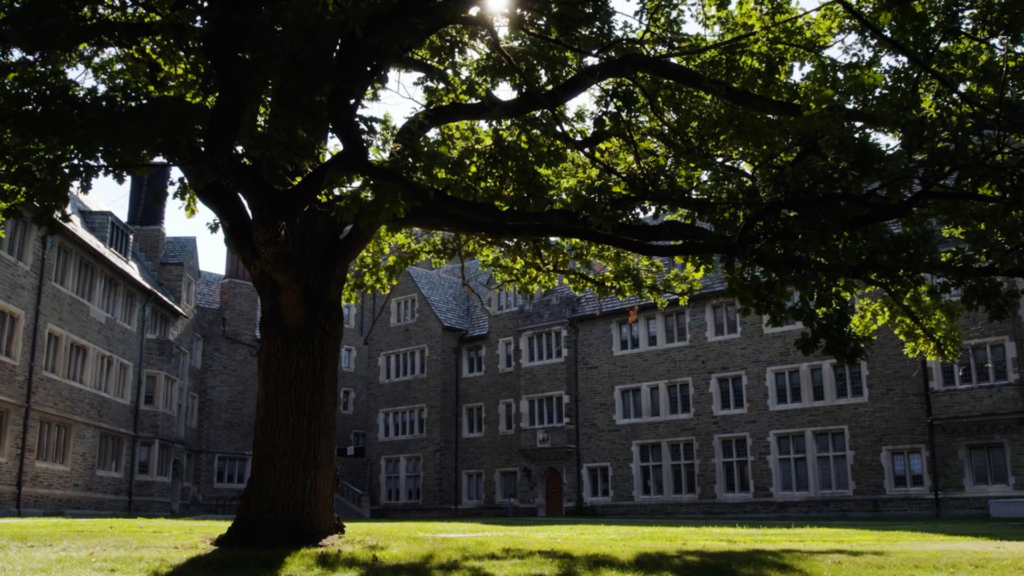
Cornell holds a distinction that no other Ivy League university can claim: it is the only Ivy League school that is also a land-grant institution. Cornell University is a privately endowed research university and a partner of the State University of New York, and its distinctive blend of public and private colleges makes it the most educationally diverse university in the Ivy League.
As New York State’s federal land-grant institution, Cornell is uniquely committed to using knowledge to serve the public good through groundbreaking research, community partnerships, and global outreach. Four of Cornell’s colleges are state-supported contract colleges affiliated with SUNY: the College of Agriculture and Life Sciences, the College of Human Ecology, the School of Industrial and Labor Relations, and the Jeb E. Brooks School of Public Policy.
This means New York State residents who attend these colleges pay lower tuition than they would at fully private Ivies, a financial dimension Harvard, Yale, or Princeton can’t match.
This public mission is not just institutional branding. It shapes the curriculum, the culture, and the student experience in meaningful ways that make Cornell distinctly oriented toward real-world application and public service alongside academic excellence.
4. The Tata Scholarship for Indian Students
For Indian students, Cornell holds a unique financial advantage that no other Ivy League university can match. The Cornell University Tata Scholarship is one of the most significant financial aid opportunities available to Indian undergraduate students applying to study in the USA.
Funded by a $25 million endowment from the Tata Education and Development Trust, the scholarship covers tuition, room and board, books, and personal expenses for about 20 Indian students each year.
The scholarship has supported over 300 Indian students since its establishment and is awarded based on financial need and academic merit. For many families, this makes Cornell financially comparable to top private universities in India or significantly cheaper than other Ivies without targeted Indian scholarships.
The Tata Scholarship is renewable for the full four-year undergraduate programme and applies across all Cornell undergraduate colleges, meaning Indian students are not restricted to a single subject area to access this support.
Importantly, the Tata Scholarship is not a separate application. Indian students apply for financial aid through the standard CSS Profile process as part of their Cornell application, with the financial aid deadline for international students set at November 1, 2026, for Early Decision applicants.
5. The Most Academically Diverse Programme Offering in the Ivy League
Cornell offers a breadth of academic programmes that is unmatched by any other Ivy League institution. The university offers more than 4,000 courses across 100 academic departments, covering disciplines from engineering and computer science to agriculture, viticulture, hotel administration, and industrial relations.
Cornell is renowned for engineering, business, agriculture, and hotel management and the School of Hotel Administration, which operates under the SC Johnson College of Business, is widely regarded as the best hospitality management programme in the world.
This academic breadth is not just about having more options. It fundamentally changes what kind of student Cornell is right for. A student interested in both science and policy can combine coursework from the College of Agriculture and Life Sciences with the Jeb E. Brooks School of Public Policy in a way that no comparable institution facilitates.
Students drawn to design and urban planning can pursue Architecture, Art, and Planning alongside coursework in the social sciences. Cornell encourages students to explore across its colleges, producing graduates with unusually diverse skill sets that reflect the cross-pollination of its programmes.
6. A Student Body From 108 Countries
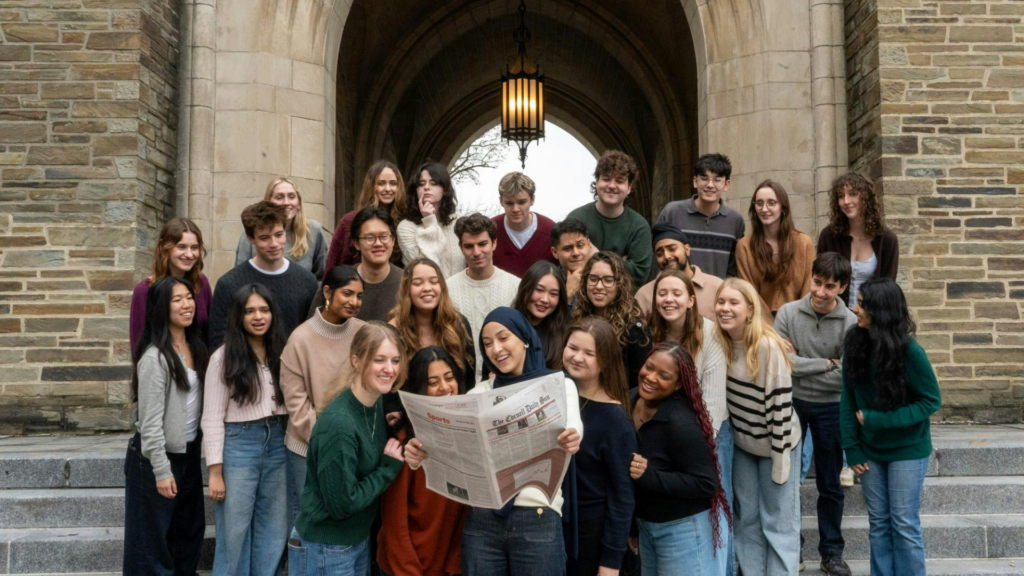
Cornell students come from 108 countries, and the university has 16,071 undergraduates and 7,357 graduate students, making it the largest Ivy League school by student population.
At Cornell, 14 percent of undergraduates qualified for the Pell Grant, reflecting the university’s serious commitment to socioeconomic diversity alongside geographic and cultural diversity.
The integration of people with varied interests, backgrounds, and international experiences inspires students to engage more actively with research, volunteer work, and student organisations.
Cornell has over 1,200 student clubs and organisations, Division I athletics, intramural sports, and an Ithaca campus set among botanic gardens and scenic gorges, providing a campus life that is both intellectually rich and physically stunning.
Cornell’s founding philosophy of co-education and non-sectarianism, established at a time when such policies were genuinely uncommon, created a culture of inclusion that has grown over 160 years into one of the most genuinely diverse academic communities in the United States.
7. Cornell Tech — A Second Campus in New York City

Cornell is one of the only Ivy League universities that operates a fully functional second campus in a major global city.
Cornell Tech, located on Roosevelt Island in New York City, is a graduate-level campus focused on technology, entrepreneurship, and applied science, but it also creates a pipeline and network that directly benefit Cornell undergraduates, especially those interested in technology and startup culture.
Cornell Tech partners with major technology companies, venture capital firms, and urban institutions in New York City in ways the Ithaca campus, beautiful as it is, cannot replicate.
For students who want the intellectual depth of a residential Ivy League campus alongside access to the world’s most active technology and finance ecosystem, Cornell’s dual-campus model is a genuine differentiator among Ivy League institutions.
8. Undergraduate Research From the Very First Year
Cornell students get involved in cutting-edge research with Cornell faculty as soon as their first year on campus, across all disciplines.
The Cornell Undergraduate Research Board provides support and community for students pursuing research from their earliest days on campus, and research opportunities span all seven undergraduate colleges, not just the sciences.
This early access to research is both a practical academic advantage and a profile-building opportunity for students thinking about graduate school, medical school, or careers in research and technology.
The combination of a large research university infrastructure with a 9:1 student-to-faculty ratio means that students have unusual access to faculty mentorship and original research projects compared to larger or less research-intensive institutions.
For Indian students building applications for graduate school or top employers, research experience from a Cornell lab carries significant weight.
The university’s output across biotechnology, computer science, engineering, agriculture, and social sciences consistently ranks it among the world’s most productive research institutions.
Cornell Is the Right Fit for the Right Student
Cornell is the largest, most geographically diverse Ivy League university and offers specialised programmes like the world’s best hospitality school that no other Ivy matches. That specialisation and scale is not for every student.
Cornell’s academic intensity is significant; it is often said that Cornell is the easiest Ivy to get into, but the hardest to stay in and students who choose Cornell for strategic reasons alone, without genuine engagement with what it offers, rarely thrive as fully as those who chose it because it matched who they are.
For students who love breadth, research, public service, and the opportunity to build something genuinely interdisciplinary, Cornell offers a combination of access, diversity, and academic richness that is available nowhere else in the Ivy League.
At Essai, we help students understand not just how to apply to Cornell, but whether Cornell is the right choice for their profile, interests, and long-term direction. The seven-college structure creates genuine strategic options that reward careful planning and specific application choices.
Visit essai.in/consult to start building the Cornell application that gives you the best possible chance at the Ivy League education that suits you most.
Since 2014, Essai has helped hundreds of students secure offers from top US and UK universities. Our personalised, long-term approach is designed to help every student find and tell their most compelling story.