There was a time when going to university meant sitting in a lecture hall, taking notes, and emerging four years later with a degree and a handshake. That version of higher education still exists in many parts of the world.
But in 2026, the top US universities have quietly become something far more expansive, dynamic, and interconnected. They are no longer buildings where learning happens. They are living ecosystems where students grow, build, connect, and contribute simultaneously.
If you are an ambitious student anywhere in the world considering a US university application, understanding this shift is not just interesting. It is genuinely useful. Because the students who thrive in these environments are not just academically strong. They are ecosystem-ready.
From Classrooms to Connected Campuses
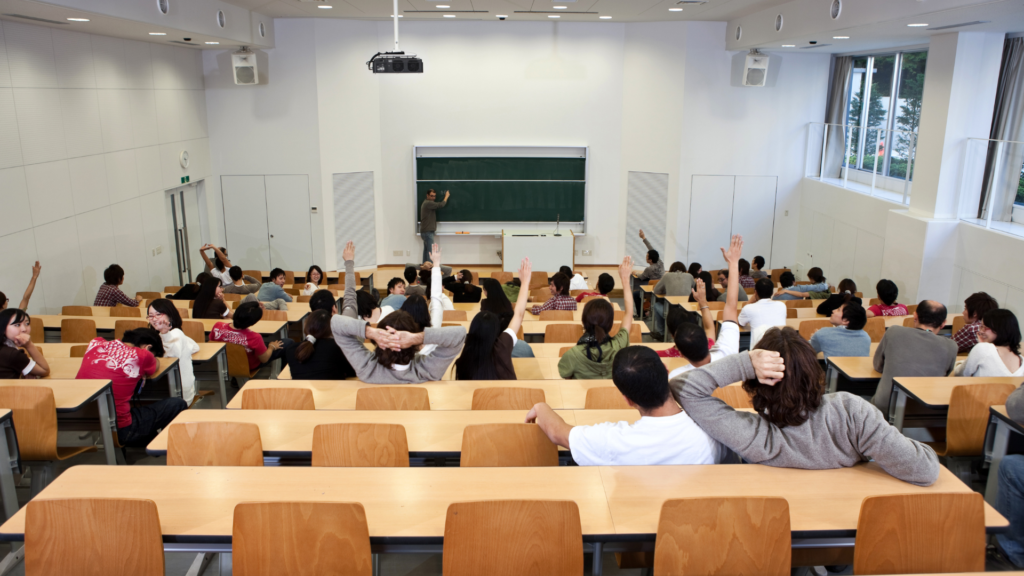
Walk onto a top US campus in 2026, and the first thing you notice is how little separates academic life from everything else. Modern campus infrastructure has evolved into a holistic technology ecosystem that drives interoperability across learning, research, collaboration, and even physical safety systems.
AI-enabled advising tools, smart buildings, digital wellness platforms, and real-time academic support systems are woven into the daily fabric of student life.
This is not tech for tech’s sake. It reflects a deliberate philosophy: that learning happens everywhere, not just inside a classroom.
Personalized learning paths at leading US universities are already increasing deep student engagement by around 30%, with AI tools scheduling club activities, adapting coursework to individual pacing, and flagging students who might need additional support before they even ask for it.
The result is a campus that responds to you, not just one that expects you to respond to it.
Interdisciplinary Learning Is Now the Default

One of the most meaningful shifts in US higher education is the collapse of rigid academic boundaries. MIT has claimed the top spot in the Times Higher Education Interdisciplinary Science Rankings for the second consecutive year, followed by Stanford, Caltech, and UC Berkeley, with institutions like Duke, Georgia Tech, and Purdue also placing in the top 10.
These rankings exist because interdisciplinary output is now a serious measure of academic quality, not just a bonus feature.
For students, this translates into real flexibility. A student interested in AI can study it through the lens of public policy at Harvard, entrepreneurship at Penn’s Wharton-Engineering bridge, or robotics at CMU.
University of Pennsylvania’s programs integrate AI with business through the Wharton School, offering unique angles on AI entrepreneurship and decision-making, while the University of Washington benefits directly from its proximity to Amazon, Microsoft, and other major tech employers.
The ecosystem allows a student’s academic direction to evolve organically, guided by curiosity rather than locked into a single department. You can read more about how interdisciplinary thinking is shaping admissions at essai.in/academic-shifts-us-universities.
Industry Is Not Outside the Gates Anymore

Perhaps the most striking change is how deeply industry has moved inside the university. Research partnerships, co-designed curricula, sponsored capstone projects, and live industry challenges are now standard features at top US schools, not exceptions.
According to the Association of Public and Land-grant Universities, firms that collaborate with universities demonstrate measurably higher innovation productivity, while universities gain access to applied research opportunities, co-investment in strategic research areas, and real-world industry assets.
Students are the direct beneficiaries. Programs like the NSF’s Engineering Research Centers and Industry-University Cooperative Research Centers directly support collaborative research between students, faculty, and industry partners, giving undergraduates access to real problems, real funding, and real professional mentors years before graduation.
At the University of Florida, this has been formalized into a career ecosystem that begins at orientation. Career readiness is introduced as a core component of the overall student experience from the very first day, with industry engagement organized around broad clusters such as STEM, AI, and health sciences rather than individual academic subjects.
As one UF career director put it, “career readiness is adaptability; it is about preparing for a lifetime of pivots.”
Research Is Something Students Do, Not Just Watch

At most universities globally, research is something professors do while students observe. At top US institutions, this boundary has been systematically dismantled.
Programs like Purdue’s Discovery Undergraduate Interdisciplinary Research Internship offer full-time, paid research fellowships to undergraduates, placing them on interdisciplinary faculty-led projects in areas such as global health, global security, and global sustainability.
This access to meaningful research is not limited to graduate students or science majors. Humanities students work alongside engineers.
Economics students collaborate with environmental scientists. The goal is not just to produce research output; it is to develop students who think across boundaries, which is exactly what the modern workplace demands.
For Indian students in particular, this is a compelling reason to target US universities over other destinations. The research exposure available at the undergraduate level in the US is largely unmatched.
Mental Health, Wellness, and Belonging Are Part of the Design

A healthy ecosystem supports the whole organism, not just its productive parts. US universities in 2026 have made significant investments in student well-being as a core institutional priority, not an afterthought.
Post-pandemic enrollment pressures pushed top schools to invest seriously in experiential enhancements, including wellness centers, AI-personalized advising, and more immersive community structures.
The National Survey of Student Engagement, which measures how meaningfully students invest in academic and community life, has become as important to university reputation as research output. In 2026, with rising mental health concerns and hybrid learning legacies, these metrics are more critical than ever for student retention and success.
Students who have visited US campuses often remark on this. There is an intentional culture of support built into the campus’s physical and digital infrastructure — not dependent on any single professor or program.
What This Means for Your Application
Understanding that US universities function as ecosystems completely changes how you should approach your application. Admissions teams at these institutions are not just looking for high scores and impressive lists of achievements. They are looking for students who will actively contribute to and draw from the ecosystem around them.
That means the best applicants in 2026 are those who can demonstrate curiosity that crosses disciplines, a history of engaging with mentors, peers, and communities outside their immediate academic circle, and a clear sense of what they want to build, not just study.
At Essai, this is exactly the kind of thinking we help students develop early. From profile building in Grade 10 to crafting application narratives that communicate genuine direction, our approach is designed to help you show universities not just what you have done, but why you are ready to contribute to something much larger than a degree.
Explore how we approach college preparation at essai.in/profile-building, or book a consultation to start building a profile that speaks the language of the modern US university ecosystem.