Publishing as a student is one of the most powerful ways to stand out in competitive college admissions, especially if you’re targeting Ivy League or top global universities.
Academic writing not only sharpens your ability to think critically but also proves that you can contribute meaningfully to your field before even entering college.
While grades, extracurriculars, and essays showcase ability, getting published demonstrates something deeper: initiative, discipline, and the willingness to engage with ideas at a professional level.
For students interested in literature, philosophy, history, linguistics, art history, or cultural studies, there’s a thriving ecosystem of journals specifically designed for emerging scholars.
These publications offer mentorship, professional editing, and insight into the peer-review process that defines academic life.
In this comprehensive guide, you’ll find nine verified and active journals for humanities students that truly welcome submissions.
Whether you’re in high school or pursuing an undergraduate degree, each of these journals provides a credible platform to share your voice and strengthen your academic profile.
Why Publishing Matters for Humanities Students
Publishing in journals for humanities students is more than just a résumé enhancer; it’s a clear sign of intellectual maturity. It shows that you can generate original ideas, develop arguments, and engage with scholarly discourse, traits that universities and scholarship committees deeply value.
1. Shows Academic Rigor
Submitting your work to a peer-reviewed journal signals that your writing meets a professional standard. What began as a classroom essay becomes a published piece of scholarship, proving you can:
- Research and cite academic sources responsibly.
- Write persuasively and maintain clarity under editorial review.
- Contribute to conversations beyond your classroom.
2. Builds a Scholarly Identity
Publication transforms your academic identity from learner to contributor. Instead of simply studying great ideas, you become part of the dialogue, shaping them. That experience translates beautifully into college essays, interviews, and scholarship applications, offering real stories of intellectual growth.
3. Provides Mentorship and Feedback
Many student journals involve mentorship from professors or senior editors. You’ll receive detailed comments, learn revision strategies, and understand what makes an argument publishable a valuable lessons for anyone planning to write college research papers or theses.
4. Elevates Your College Application
Admissions officers at elite institutions often highlight publication as a differentiator. Including a research-based essay in your Activities List or supplemental materials demonstrates both initiative and academic depth.
1. The Concord Review (History, High School)
Overview:
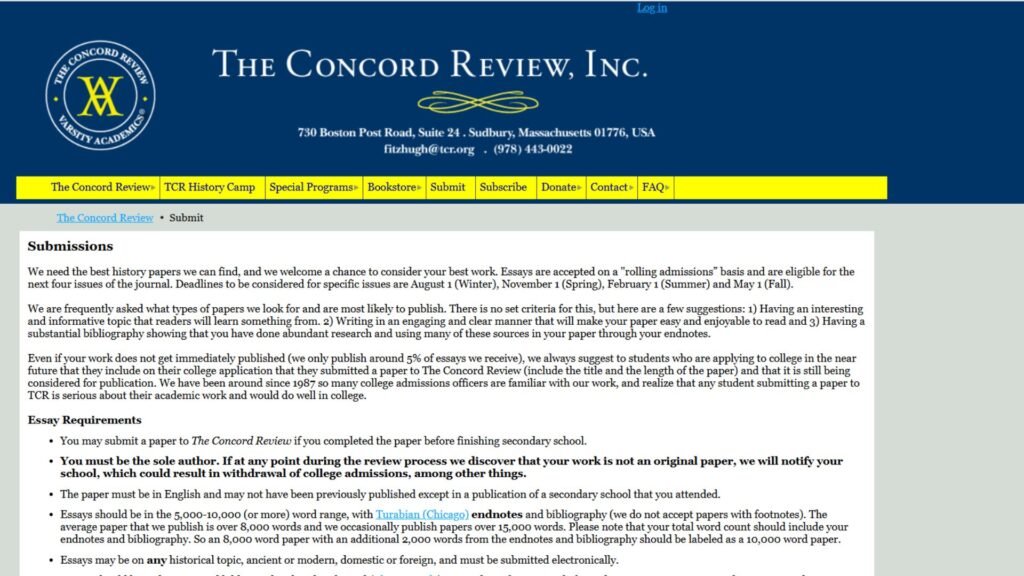
Founded in 1987, The Concord Review remains the gold standard for high-school history research publications. It showcases essays of 4,000–6,000 words that use both primary and secondary sources.
Why It Matters:
Students published here frequently go on to top-tier universities. The Review’s reputation for academic excellence makes it one of the most prestigious journals for humanities students at the secondary level.
Submission Tips:
- Choose a precise topic such as “Propaganda in the Spanish Civil War” or “Trade Policies of the Mughal Empire.”
- Use the Chicago Manual of Style for all citations.
- Connect your historical topic to contemporary significance.
Apply here: https://tcr.org/submit
2. Polyphony Lit (Creative Nonfiction & Essays, High School)
Overview:
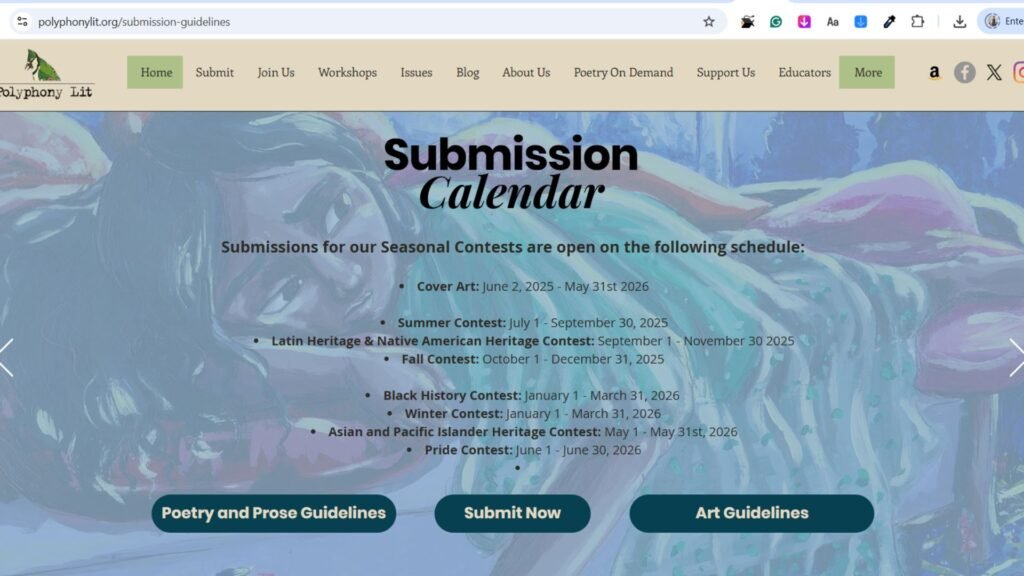
Polyphony Lit is a global, student-run literary journal that accepts poetry, fiction, and nonfiction from high-school students. What makes it special is its editorial feedback system so that every submission receives thoughtful critique.
Why It Matters:
The publication doubles as an educational experience. You not only publish your work but also learn how to review and edit a foundational skills for college-level writing.
Submission Tips:
- Combine narrative storytelling with cultural or reflective analysis.
- Keep essays under 1,800 words.
- Incorporate feedback if you choose to revise and resubmit.
Apply here: https://www.polyphonylit.org/submission-guidelines
3. The Macksey Journal, Johns Hopkins University
Overview:
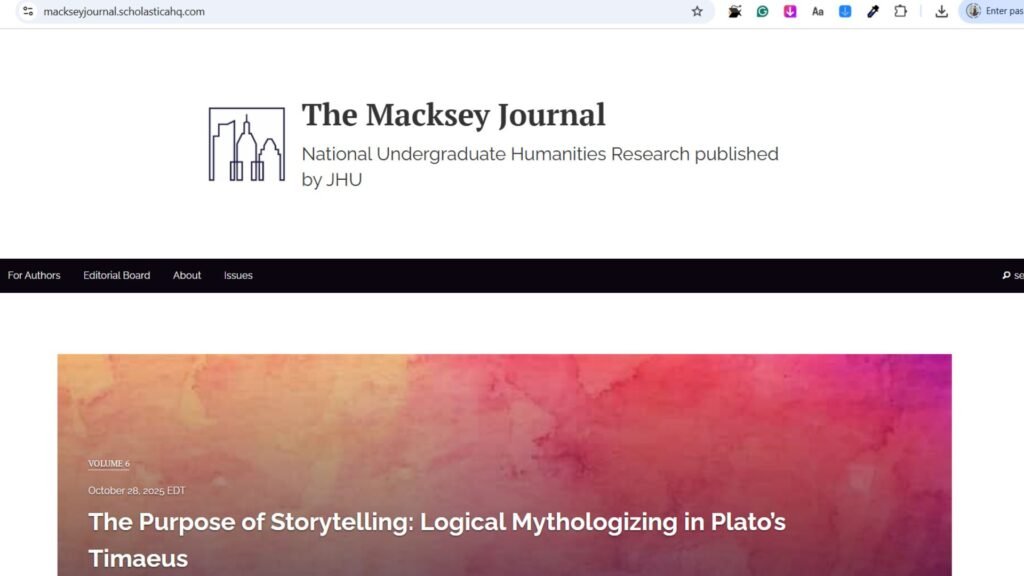
Hosted by Johns Hopkins, The Macksey Journal publishes research presented at the Richard Macksey National Undergraduate Humanities Research Symposium.
Why It Matters:
Publication here shows you’ve participated in a national conference and it is a rare and respected achievement for undergraduates.
Submission Tips:
- Submit an abstract before the symposium.
- Highlight interdisciplinary insights across literature, art, or history.
- Keep the paper accessible and well-organised.
Apply here: https://mackseyjournal.scholasticahq.com/for-authors
4. Penn Journal of Philosophy, Politics & Economics (PJPPE)
Overview:
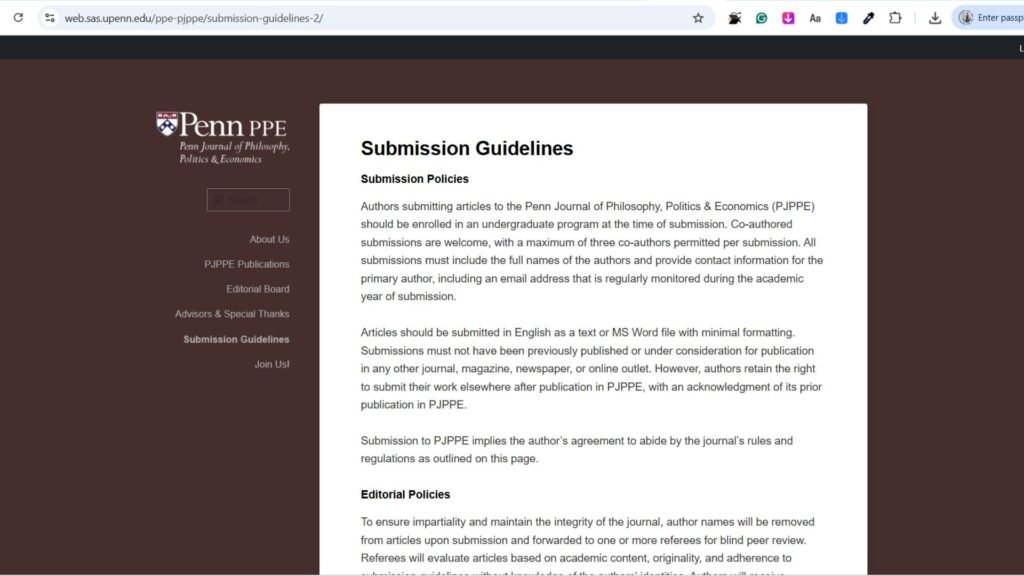
Run by University of Pennsylvania students, PJPPE publishes analytical essays that integrate philosophy, politics, and economics.
Why It Matters:
It’s a prestigious interdisciplinary outlet that showcases your ability to connect ethical reasoning, economic data, and political theory, ideal for applicants to PPE or public policy programs.
Submission Tips:
- Blend moral theory with real-world applications.
- Use empirical evidence where possible.
- Maintain a clear structure and avoid jargon.
Apply here: https://web.sas.upenn.edu/ppe-pjppe/submission-guidelines-2/
5. Blue Marble Review (Essays & Reflective Nonfiction, Ages 13–22)
Overview:
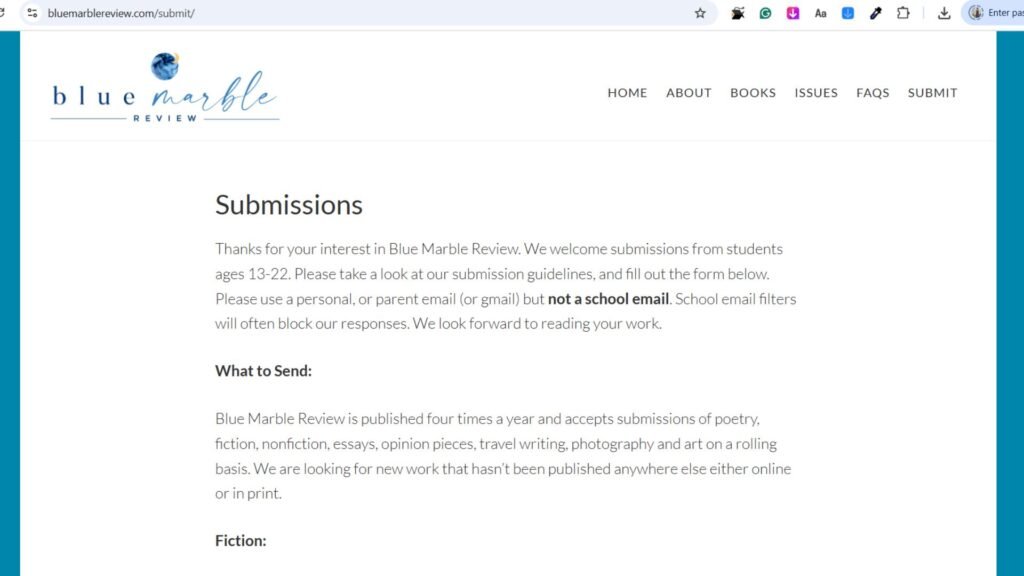
An online quarterly, Blue Marble Review publishes essays, opinion pieces, travel writing, and poetry that express youthful curiosity and global awareness.
Why It Matters:
Unlike many academic journals, Blue Marble values authenticity over complexity. It’s a great first publication for students exploring creative or reflective nonfiction.
Submission Tips:
- Write about an experience that changed your worldview.
- Keep essays around 1,500 words.
- Include a concise author bio with your age, school, and interests.
Apply here: https://bluemarblereview.com/submit
6. Young Scholars in Writing (Rhetoric & Composition, Undergraduate)

Overview:
Young Scholars in Writing (YSW) is a peer-reviewed, open-access journal featuring undergraduate research in writing, rhetoric, and literacy.
Why It Matters:
YSW bridges academic writing and communication theory. Publishing here proves that you can conduct rigorous analysis, interpret language critically, and engage with scholarly methods. It’s a massive plus for Ivy League humanities programs.
Submission Tips:
- Submit work that originated from a research project or advanced writing course.
- Outline your methodology clearly (case study, discourse analysis, etc.).
- Expect detailed revision rounds.
Apply here: https://youngscholarsinwriting.org/index.php/ysiw/information/authors
7. Apollon Undergraduate e-Journal (Interdisciplinary Humanities, Undergraduate)
Overview:
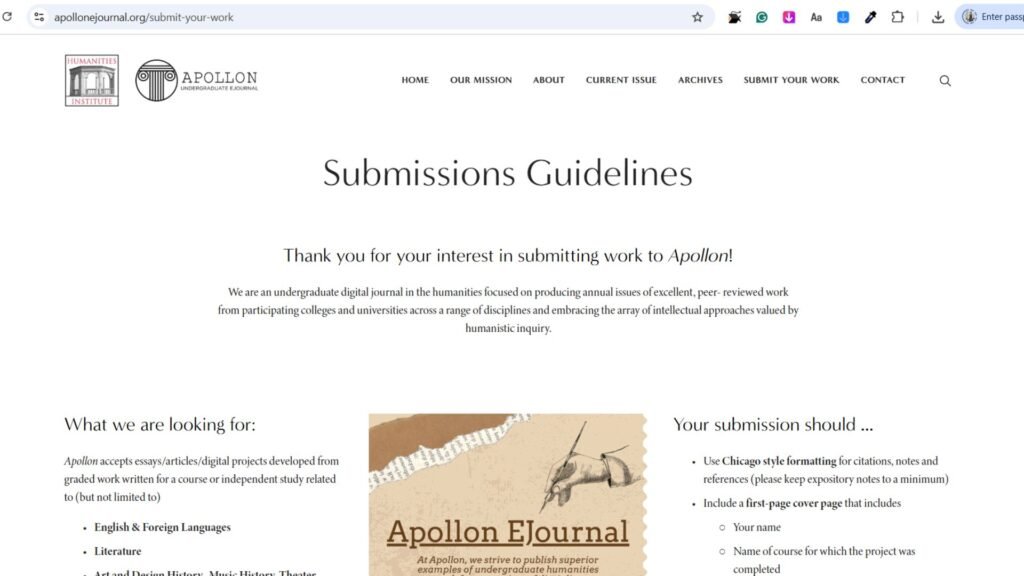
Published by Rollins College, Apollon features interdisciplinary humanities essays by undergraduates from around the globe.
Why It Matters:
Its unique focus allows students to explore how philosophy intersects with art, literature, or public policy. The journal welcomes work that pushes the boundaries of traditional academia.
Submission Tips:
- Revise an existing term paper into journal format.
- Write an abstract under 200 words with 5–7 keywords.
- Follow MLA or Chicago style as specified.
Apply here: https://www.apollonejournal.org/submit-your-work
8. History Matters, Appalachian State University (Undergraduate History)
Overview:
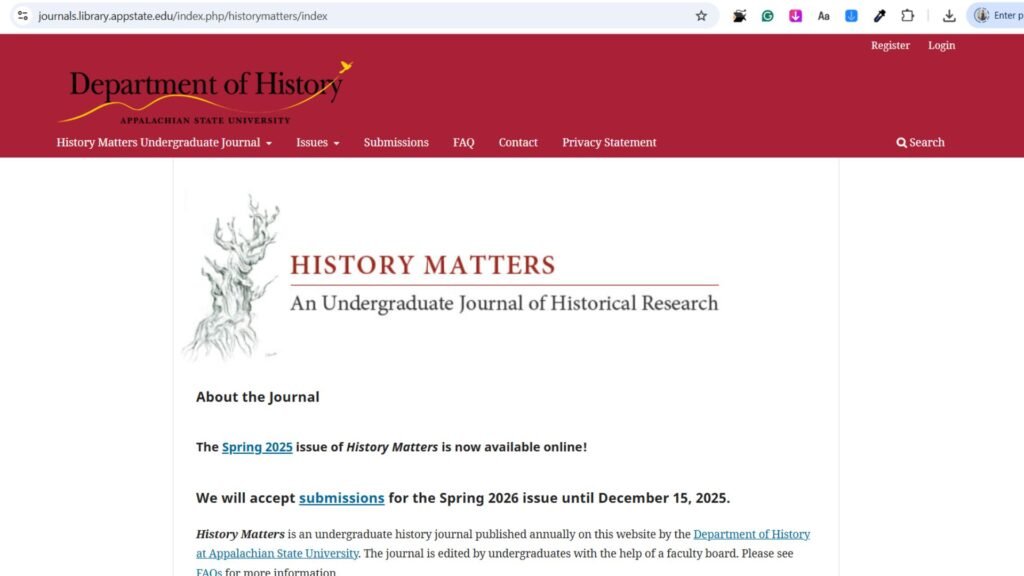
History Matters is a peer-reviewed undergraduate journal known for publishing exceptional historical essays. Its editorial board includes faculty mentors who guide authors through professional-style revisions.
Why It Matters:
It provides an authentic experience in historical argumentation, preparing undergraduates for graduate research and academic writing.
Submission Tips:
- Use both primary and secondary sources.
- Maintain clear thesis-driven structure.
- Use Chicago citation format.
Apply here: https://journals.library.appstate.edu/index.php/historymatters/index
9. Nota Bene, Canadian Undergraduate Journal of Musicology

Overview:
Published by Western University, Nota Bene features undergraduate research in music theory, history, and ethnomusicology.
Why It Matters:
As one of the few dedicated musicology journals for undergraduates, it’s ideal for students blending art, culture, and analysis.
Submission Tips:
- Situate your essay within ongoing scholarly discussions.
- Provide a clear abstract and bibliography.
- Read recent issues to match tone and scope.
Apply here: https://ojs.lib.uwo.ca/index.php/notabene/about/submissions
Common Mistakes Students Make When Submitting to Journals
Publishing in journals for humanities students takes effort and patience. Many first-time authors make simple mistakes that delay or derail acceptance. Here are the most common pitfalls to avoid:
- Ignoring Submission Guidelines:
Each journal has unique requirements for word count, formatting, and citation style. Overlooking these can lead to automatic rejection. - Submitting Too Early:
Your paper should go through multiple revisions. Seek teacher feedback, edit for flow, and polish your citations before submitting. - Weak Abstracts or Titles:
Editors often make initial decisions based on your abstract and title. Make sure both are specific, concise, and reflect your argument. - Lack of Original Insight:
Summarising existing research isn’t enough. Editors look for fresh perspectives, synthesis, or a clear stance supported by evidence. - Neglecting Proofreading:
Even brilliant ideas can be rejected for poor grammar or inconsistent citations. A clean, professional submission signals credibility.
How to Build a Long-Term Publication Portfolio
If you want to develop a sustained publishing record, treat your work like an evolving academic brand.
- Start Small, Aim High:
Begin with approachable platforms like Blue Marble Review or Polyphony Lit, then progress to peer-reviewed undergraduate journals. - Diversify Your Topics:
Don’t limit yourself to one area. Publish across history, literature, and philosophy to show intellectual versatility. - Document Everything:
Keep records of your drafts, feedback, and acceptance letters. Use platforms like PIPPAMS to stay organised across multiple projects. - Leverage Each Publication:
Add your published work to your LinkedIn, personal website, or college application portfolio. Include a reflection on what each project taught you. - Continue After Admission:
Many Ivy League schools have in-house journals. Joining them as an editor or contributor builds your professional network and academic credibility.
Using Your Publication Strategically for Ivy League Admissions
- Highlight research in essays and supplements.
- Include links to publications or PDFs in your portfolio.
- Ask mentors to reference your publishing experience in recommendation letters.
- Discuss what you learned about research and revision during interviews.
- Keep contributing once admitted, admissions committees value ongoing intellectual engagement.
FAQs
Q1: Can high-school students publish in these journals?
Yes. The Concord Review, Polyphony Lit, and Blue Marble Review specifically welcome high-school authors.
Q2: Do these journals charge publication fees?
Most are free, especially those hosted by universities. Always verify via official pages before submitting.
Q3: What is the ideal paper length?
Most accept essays between 1,500 and 6,000 words. Check each journal’s criteria before finalising your manuscript.
Q4: Will publication guarantee Ivy League admission?
No publication guarantees admission, but it significantly enhances your academic credibility and shows initiative.
Q5: What if my paper is rejected?
Rejection is part of the process. Use the feedback to strengthen your paper, then resubmit elsewhere. This resilience impresses both editors and admissions officers.
Final Thoughts
Publishing in journals for humanities students is a journey of academic growth, confidence, and creativity. Each submission helps refine your thinking, discipline, and communication skills, all of which are vital for future success.
If you’re serious about building a strong academic portfolio, explore Essai, a trusted mentorship platform that helps students refine research papers and prepare them for Ivy League-level submissions.
To stay organised from idea to publication, track your progress and feedback using PIPPAMS. It’s the perfect tool for managing drafts, timelines, and collaborative projects.
Start your publishing journey today, one essay at a time, and watch your academic voice resonate far beyond the classroom.