
Ivy League Yield Protection is one of the most important admissions dynamics students applying in 2026 need to understand, yet it is rarely explained clearly.
Have you ever wondered why students with perfect grades, top test scores, and strong extracurriculars still receive unexpected rejections?
Why do some applicants get accepted by more selective schools but rejected by “less competitive” ones?
Why do admissions outcomes often feel unpredictable, even for top-performing students?
The answer, in many cases, lies in Ivy League Yield Protection.
This guide explains how Ivy League Yield Protection works, why it matters more than ever in 2026, and how students can build smarter application strategies that reduce risk and improve outcomes.
What Is Ivy League Yield Protection?
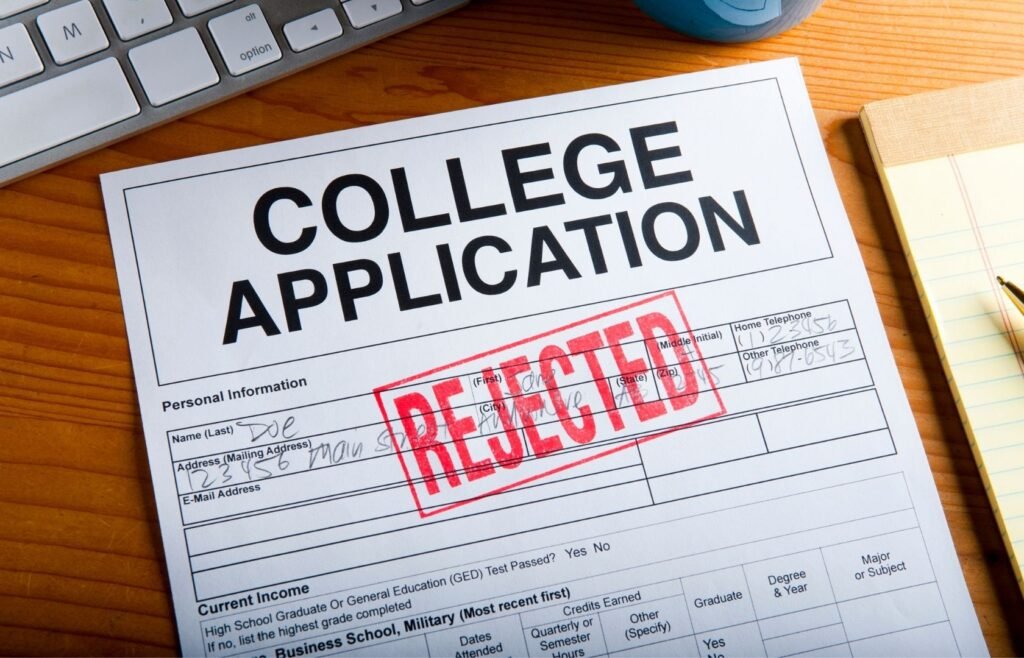
Ivy League Yield Protection is an admissions practice used by highly selective universities to manage their yield rate, which is the percentage of admitted students who actually enroll.
In Ivy League admissions, colleges do not assess applications solely on academic merit; they also evaluate how likely a student is to accept an offer if admitted.
When admissions officers believe a strong or even exceptional applicant may choose another Ivy League or elite institution instead, they may reject or waitlist that student to avoid lowering their yield statistics.
This means that a student can have excellent grades, top test scores, and strong extracurriculars, yet still face rejection due to perceived enrollment risk.
Ivy League Yield Protection is not officially acknowledged by universities, but it is widely discussed by admissions experts and supported by observable admissions patterns, especially in competitive cycles like 2026.
Key points to understand Ivy League Yield Protection:
- It is focused on enrollment likelihood, not academic weakness
- It often affects high-performing or overqualified applicants
- It helps colleges maintain high yield rates and rankings
- It is influenced by essay specificity, demonstrated fit, and application strategy
- It has become more prominent due to test-optional policies and larger applicant pools
- It can result in unexpected rejections or waitlists, even for strong candidates
How Ivy League Yield Protection Impacts College Admissions in 2026
In 2026, Ivy League admissions are shaped not just by how strong an applicant is, but by how predictable they appear as an enrollee.
Ivy League Yield Protection quietly but powerfully influences decisions, reshaping how applications are read, ranked, and filtered at every stage of the admissions process.
Below is a detailed breakdown of how Ivy League Yield Protection impacts college admissions in 2026.
1. Rejections No Longer Indicate Academic Weakness
One of the biggest shifts caused by Ivy League Yield Protection in 2026 is that rejection is no longer a clear signal of academic insufficiency.
Many students who are fully qualified for Ivy League admission are denied admission because admissions committees believe they are unlikely to accept an offer.
As applicant quality has risen across the board, admissions officers are forced to make decisions that protect enrollment outcomes rather than reward merit alone.
This means rejection often reflects institutional risk management, not a lack of capability.
- Strong grades and rigorous coursework are assumed, not rewarded
- Overqualified applicants may be viewed as “flight risks”
- Rejection can occur even when academic benchmarks are exceeded
- Admissions decisions increasingly reflect probability, not performance
2. Enrollment Likelihood Becomes a Core Evaluation Factor
In 2026, Ivy League admissions decisions are influenced heavily by perceived enrollment likelihood.
Admissions officers are trained to assess whether a student sees the institution as a genuine first choice or merely one option among many elite schools.
When that intent is unclear, Ivy League Yield Protection may quietly influence the outcome.
Applications that fail to communicate commitment create uncertainty, and uncertainty works against the applicant.
- Admissions teams assess “Will this student say yes?”
- Weak signals of interest increase perceived yield risk
- Schools prioritize certainty alongside academic strength
- Applications are evaluated through a probability-based lens
3. Essays Are Interpreted as Intent Signals, Not Just Stories
Essays play a more strategic role in 2026 because Ivy League Yield Protection turns them into tools for evaluating intent.
Beyond voice and reflection, essays are read to understand how deeply a student connects with a specific institution.
Generic or interchangeable essays raise red flags, while highly specific narratives reduce yield concerns.
Essays now serve as evidence of the seriousness of enrollment.
- School-specific academic alignment matters more than polish
- Generic praise weakens admissions confidence
- Clear “why this school” reasoning reduces yield risk
- Essays help admissions officers justify enrollment predictions
4. Overqualification Has Become a Hidden Liability
A critical but often misunderstood impact of Ivy League Yield Protection is that appearing “too strong” can hurt an application.
When a student’s profile suggests they are more likely to enroll at a higher-ranked or peer institution, admissions officers may assume the school is a backup option.
That assumption can quietly move an application out of contention.
Without explicit institutional commitment, excellence alone is not enough.
- Extremely strong profiles may trigger skepticism
- Schools avoid admitting students unlikely to enroll
- Overqualification increases perceived yield uncertainty
- Clear intent is required to counter this assumption
5. International Applicants Face Greater Yield Scrutiny
International students are disproportionately affected by Ivy League Yield Protection in 2026.
Visa timelines, financial aid dependency, and historical enrollment trends make international yield harder to predict.
As a result, admissions officers apply stricter scrutiny when evaluating international applicants’ likelihood of enrolling.
Academic excellence must be paired with clarity and commitment.
- Visa and logistics introduce enrollment uncertainty
- Financial aid needs increase institutional risk
- Historical data affects international yield modeling
- Clear signals of readiness and intent are critical
6. Waitlists Are Used Primarily as Yield-Control Mechanisms
In 2026, waitlists are no longer neutral holding areas. They are active tools of Ivy League Yield Protection.
Admissions committees use waitlists to manage enrollment fluctuations after initial decisions are released, allowing them to respond strategically to acceptance patterns.
Being waitlisted often reflects uncertainty, not rejection.
- Waitlists allow adjustment after offer declines
- Competitive applicants may be held for yield flexibility
- Enrollment patterns dictate waitlist movement
- Yield protection drives how waitlists are managed
7. Poor School Shortlisting Increases Yield Risk
Ivy League Yield Protection is amplified when applicants apply to multiple peer institutions without a clear rationale.
Broad, prestige-driven school lists signal indecision.
In contrast, thoughtfully constructed lists that align with academic interests reduce perceived yield risk and strengthen admissions confidence.
How a student applies matters as much as where they apply.
- Random Ivy applications raise commitment concerns
- Focused lists signal intentional decision-making
- Academic fit lowers yield uncertainty
- Strategic shortlisting improves admissions outcomes
8. Holistic Review Becomes More Conservative
Yield protection makes holistic admissions review more cautious in 2026.
When applicants appear similarly qualified, admissions officers are more likely to favor those with clear intent signals.
Ambiguous profiles require interpretation, and interpretation introduces risk.
Clarity is rewarded; ambiguity is penalized.
- Admissions officers prefer applications that explain themselves
- Ambiguous motivation weakens confidence
- Clear narratives reduce institutional risk
- Yield protection favors certainty over speculation
9. Predictability Is Valued Over Maximum Potential
Another major impact of Ivy League Yield Protection is a preference for predictability.
Admissions committees must balance class size, financial aid budgets, housing, and academic distribution.
Students who appear predictable in enrollment behavior are easier to plan around than those with uncertain intent.
This shifts decisions toward stability.
- Predictable enrollment simplifies class planning
- Financial and housing constraints influence decisions
- Risk-averse choices become more common
- Yield stability outweighs speculative potential
10. Admissions Strategy Becomes as Important as Achievement
Ultimately, Ivy League Yield Protection reshapes college admissions in 2026 by making strategy inseparable from achievement.
Academic excellence is the baseline. What differentiates outcomes is how clearly students communicate intent, fit, and commitment.
Those who understand yield protection can position themselves effectively. Those who do not often misread results as randomness.
- Strategy complements academic strength
- Intent must be demonstrated, not assumed
- Applications must reduce institutional doubt
- Yield awareness improves admissions clarity
Why Ivy League Yield Protection Exists
Ivy League Yield Protection exists because yield is not just a vanity metric; it is a core operational and reputational indicator for elite universities.
Yield reflects how desirable an institution is perceived to be by top applicants and how accurately it can predict enrollment behavior.
In an admissions environment where thousands of applicants look equally qualified on paper, yield becomes a stabilizing force that helps institutions manage uncertainty.
Yield matters because it directly affects:
- Institutional rankings, where a higher yield signals stronger applicant preference and selectivity
- Class size planning, ensuring the incoming cohort matches academic, geographic, and demographic targets
- Housing and faculty allocation, allowing universities to plan residential space, course offerings, and staffing accurately
- Financial aid forecasting, helping institutions manage aid budgets without overcommitting resources
- Long-term prestige, as a consistent yield, reinforces the perception that admitted students actively choose the institution
Number of students who enroll ÷ Number of students admitted
At Ivy League schools, yield rates often exceed 70%, and at some institutions, they are even higher.
At this level, even a small decline can have outsized consequences.
A drop of just a few percentage points can affect rankings, disrupt housing and course planning, strain financial aid budgets, and signal reduced desirability to future applicants.
In 2026, these pressures are amplified by test-optional policies, record-high application volumes, rising financial aid costs, and increased competition among elite universities.
As a result, Ivy League Yield Protection has evolved into a strategic admissions tool, enabling institutions to manage risk, maintain stability, and protect their long-term standing as they navigate an increasingly unpredictable applicant pool.
The Yield Rate: The Metric Behind the Curtain
Colleges calculate the yield rate simply as:
Yield Rate = Enrolled Students ÷ Admitted Students
For Ivy League schools, yield rates often exceed 65–80%.
A drop of even 2–3% can impact rankings, budgets, and future admissions cycles.
This is why Ivy League Yield Protection exists.
Who Is Most Affected by Ivy League Yield Protection?

Ivy League Yield Protection most strongly affects applicants who appear academically strong but uncertain in their likelihood of enrolling.
In 2026, admissions committees are managing record-high volumes of qualified candidates, which forces them to prioritize enrollment predictability alongside merit.
As a result, certain applicant groups face disproportionately greater scrutiny related to yield.
- Highly qualified or “overqualified” applicants: Students with exceptional grades, rigorous coursework, and top test scores may be perceived as favoring a higher-ranked or peer institution, leading schools to treat them as enrollment risks.
- International students: Visa uncertainty, financial aid dependency, and historically lower yield rates make international applicants harder to predict, even when their academic profiles are outstanding.
- Applicants with generic or interchangeable applications: Essays and narratives that could fit multiple Ivy League schools weaken signals of genuine interest, increasing doubts about whether the student would actually enroll.
- Students applying broadly to multiple Ivy League or peer schools: Prestige-driven school lists without a clear academic rationale can signal indecision, raising concerns about the applicant’s true first choice.
- Students without clear enrollment signals: Weak “why this school” explanations, limited engagement, or unclear academic goals make commitment harder to assess, allowing yield protection to influence decisions.
Common Profiles That Trigger Ivy League Yield Protection
Let’s make this practical.
In 2026, Ivy League admissions officers actively identify patterns that suggest an applicant may be unlikely to enroll if admitted.
When these signals appear, Ivy League Yield Protection can quietly influence the outcome, even for academically strong candidates.
- Applicants with near-perfect grades and test scores: Extremely strong academic profiles can sometimes signal overqualification, leading admissions officers to assume the student is likely to choose a higher-ranked or peer Ivy institution.
- Students whose activities align more strongly with another Ivy: When extracurriculars, research interests, or academic focus clearly match a different Ivy League school, it raises doubts about genuine fit with the institution being applied to.
- Applicants whose essays lack school-specific depth
Essays that do not reference specific programs, faculty, or academic culture weaken confidence in the student’s commitment and increase perceived yield risk. - Applications that feel “copy-pasted” across schools: Reused narratives and generic language make it difficult for admissions teams to distinguish true interest from strategic hedging.
- Students who apply without demonstrated interest or intent: limited engagement, vague “why this school” responses, or unclear academic goals make it harder to predict enrollment likelihood.
Admissions officers quickly identify these patterns, and when multiple signals appear together, Ivy League Yield Protection decisively influences the admissions process.
Overqualification and Ivy League Yield Protection
Admissions officers may assume:
- “This student will choose Harvard over us.”
- “They are using us as a backup.”
- “They are unlikely to enroll if admitted.”
When that perception forms, Ivy League Yield Protection can quietly influence the decision.
This is why some students see unexpected rejections despite excellent credentials.
The Role of Yield in Ivy League Rankings
Ranking organizations consider yield as a proxy for desirability.
A higher yield suggests:
- Strong institutional appeal
- Competitive admissions
- Confident applicant decisions
Protecting yield helps Ivy League schools maintain their global standing.
This is why Ivy League admissions committees continue to use yield protection in the admissions process, even if they do not publicly acknowledge it.
Ivy League Yield Protection Myths (Debunked)
- Myth 1: Ivy League colleges reject only weak applicants
Fact: Ivy League admissions committees reject many academically strong and highly competitive students because Ivy League Yield Protection influences decisions, not because those students lack qualifications.
- Myth 2: Scores guarantee admission
Reality: High test scores and grades matter, but admissions committees also evaluate how likely a student is to enroll if admitted.
- Myth 3: Applying everywhere improves odds
Reality: Applying broadly to multiple Ivy League or peer schools can signal indecision and actually increase yield-related risk.
Why Ivy League Colleges Reject “Perfect” Profiles in 2026
In 2026, Ivy League admissions committees rejected many applicants with flawless grades, top test scores, and standout achievements, often surprising even the strongest candidates.
This happens because admissions decisions are no longer based solely on academic excellence.
When thousands of applicants look equally strong, Ivy League schools rely on additional factors such as enrollment likelihood, institutional fit, and yield management.
As a result, Ivy League admissions committees often filter out even “perfect profiles” because of Ivy League Yield Protection, not because of a lack of merit.
- Academic excellence has become the baseline, as Ivy League admissions committees now expect strong grades and scores and no longer treat them as differentiators.
- Overqualification raises enrollment doubts because admissions committees may view extremely strong profiles as more likely to choose another Ivy League or peer institution, increasing yield risk.
- Unclear commitment to the institution: Applications that fail to show why a specific school is a true first choice weaken admissions confidence.
- Lack of intellectual direction or fit: Perfect academics without a clear academic narrative or purpose make it harder to assess long-term engagement.
- Generic or interchangeable essays: Essays that could apply to multiple Ivy League schools reduce perceived authenticity and intent.
- Admissions decisions prioritize predictability: Class size, financial aid, and housing planning often outweigh individual academic strength.
- Rejection reflects strategy, not ability, because admissions committees often reject perfect profiles to manage yield protection rather than because students lack qualifications.
How Essai Approaches Ivy League Yield Protection
Essai approaches Ivy League Yield Protection as a strategic part of admissions planning, not an unpredictable risk.
In 2026, Essai helps students go beyond academic excellence by clearly communicating intent, fit, and enrollment credibility throughout the application.
- Focused school shortlisting: Essai builds intentional school lists based on academic fit, reducing the appearance of backup or hedging applications.
- Intent-driven narratives: Applications clearly explain why a specific Ivy League school is a genuine first choice.
- School-specific essays emphasize academic alignment and purpose to reduce yield-related concerns.
- Proactive handling of overqualification: Strong profiles are reframed through clarity of direction rather than raw achievement.
- oherent, holistic applications: Each application element supports a consistent, credible enrollment story.
This approach helps Essai students reduce yield risk and improve Ivy League admissions outcomes in 2026.
Book a consultation to understand how Ivy League Yield Protection affects your application and get clarity on positioning your profile effectively for the 2026 admissions cycle.
Final Thoughts
In 2026, Ivy League admissions are no longer driven solely by academic excellence.
With record-high numbers of highly qualified applicants, colleges must make decisions that balance merit with enrollment predictability.
Ivy League Yield Protection has therefore become a quiet but powerful factor shaping admissions outcomes, often explaining why strong applicants receive unexpected rejections or are placed on waitlists.
Understanding this reality allows students to approach the admissions process with clarity rather than confusion.
When applicants focus on intentional school selection, clear academic direction, and genuine institutional fit, they reduce uncertainty and strengthen their applications.
Success in Ivy League admissions today depends not only on being capable, but on being convincingly committed.
FAQs
Q. What is Ivy League Yield Protection in simple terms?
A: Ivy League Yield Protection is when colleges reject or waitlist strong applicants because they doubt the student will enroll if admitted.
Q. Can essays really reduce Ivy League Yield Protection?
A: Absolutely. Well-positioned essays that demonstrate fit and intent help reduce yield concerns.
Q. Is Early Decision the best way to avoid Ivy League Yield Protection?
A: Early Decision significantly reduces Ivy League Yield Protection, but only when aligned strategically