Have you ever wondered why academically excellent students still miss out on Ivy League colleges because of Ivy League College Deadlines?
Why does one missed date undo years of hard work? And why do Ivy League College Deadlines matter far more than students realise?
Ivy League College Deadlines are often the single most overlooked reason strong applicants miss out on top universities.
For students targeting Harvard, Yale, Princeton, Columbia, Brown, Dartmouth, Cornell, or the University of Pennsylvania, understanding Ivy League College Deadlines is not optional.
It is foundational.
This guide breaks down 10 critical Ivy League College Deadlines you cannot afford to miss in 2026, explained clearly and practically for students and parents preparing for Ivy League college admissions.
Understanding Different Types of Application Deadlines
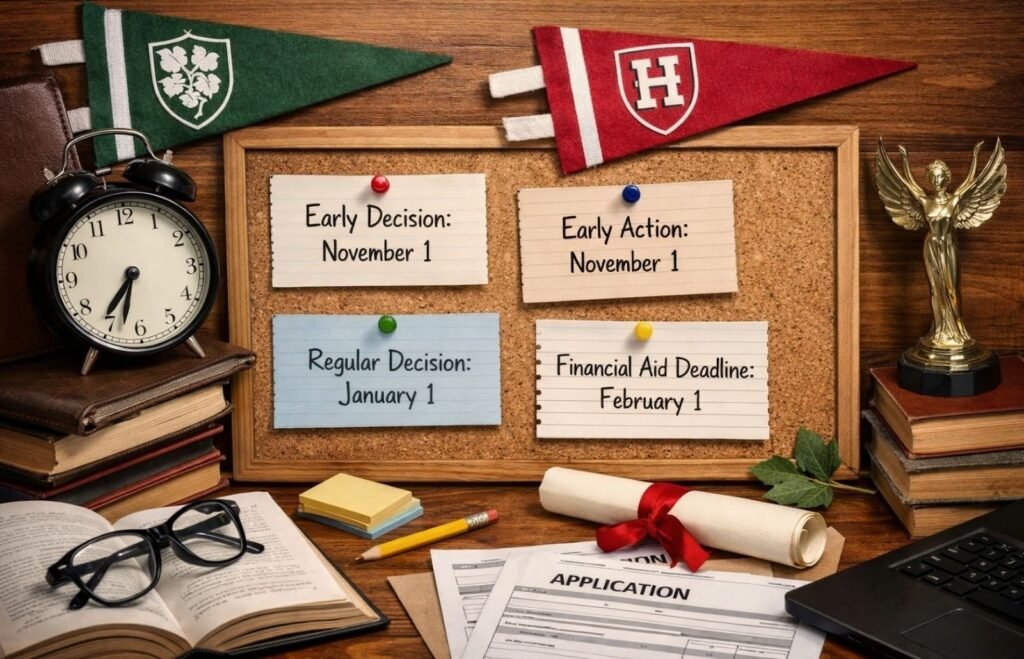
When students begin planning for Ivy League admissions, one of the most confusing aspects is the range of application deadlines.
Many applicants assume there is only one final date to remember.
In reality, Ivy League College Deadlines are divided into multiple application rounds, each with its own rules, advantages, and risks.
Understanding these deadlines clearly can help students choose the right strategy and avoid costly mistakes that can impact their chances of admission.
Early Decision (ED)
Early Decision is a binding application option offered by several Ivy League colleges.
If a student applies Early Decision and is accepted, they must enroll and withdraw all other college applications.
Key features of Early Decision deadlines:
- Typically fall in early November
- Only one Early Decision application is allowed
- Demonstrates strong commitment to a specific college
- Often offers higher acceptance rates than Regular Decision
Because Early Decision is binding, students must be confident that the chosen Ivy League college is their top choice.
At Essai, students are guided through detailed evaluations to determine whether Early Decision aligns with their academic profile, financial situation, and long-term goals.
Early Action (EA)
Early Action allows students to apply early and receive an admissions decision ahead of the regular pool, without the obligation to enroll.
Essential aspects of Early Action deadlines:
- Non-binding admission offers
- Decisions released earlier than Regular Decision
- Some Ivy League colleges use restrictive or single-choice Early Action
- Students may be limited in applying early to other private universities
Early Action Ivy League College Deadlines can be strategically useful for students who want early feedback while keeping their options open.
However, restrictive policies require careful planning to avoid policy violations.
Regular Decision (RD)
Regular Decision is the most common application route and includes the largest applicant pool.
Key points about Regular Decision deadlines:
- Fall in early January
- Offer maximum flexibility
- Highly competitive due to the large volume of applications
- Requires strong, well-planned submissions
Most Ivy League colleges’ Regular Decision deadlines fall within the first week of January.
Students often underestimate how quickly this period arrives after the holiday season, leading to rushed essays and missed components.
Essai encourages students to treat Regular Decision deadlines as final checkpoints rather than starting points.
Rolling Admissions
While Ivy League colleges do not use rolling admissions, many students apply to non-Ivy League universities alongside Ivy League schools.
Rolling admissions features:
- Applications reviewed as they are received
- Earlier submissions often receive quicker decisions
- Limited availability over time
Understanding rolling admissions helps students manage backup options while focusing on Ivy League College Deadlines.
Let’s dive into the 10 Important Ivy League Deadlines You Can’t Miss in 2026.
10 Important Ivy League Deadlines You Can’t Miss in 2026

1. Regular Decision Application Deadline
For applicants applying to the Class of 2030, the following are the Regular Decision application deadlines at America’s top universities.
These deadlines fall in the calendar year 2026, unless otherwise noted.
| Ivy League College | Regular Decision Application Deadline (2026) |
| Princeton University | January 1, 2026 |
| Harvard University | January 1, 2026 |
| Yale University | January 2, 2026 |
| Columbia University | January 1, 2026 |
| University of Pennsylvania | January 5, 2026 |
| Brown University | January 5, 2026 |
| Dartmouth College | January 1, 2026 |
| Cornell University | January 2, 2026 |
These are the primary Ivy League college deadlines for most applicants in 2026.
2. Recommendation Submission Deadlines

📅 Early January 2026
Teacher and counselor recommendations are a required part of Ivy League applications.
They provide admissions officers with an external and credible evaluation of the student. These letters highlight academic ability, classroom engagement, and personal growth.
Recommendation deadlines fall in early January 2026, aligned with Regular Decision timelines.
Late submissions can make an application incomplete. Admissions committees may not thoroughly review incomplete applications.
Teachers and counselors handle many requests during this period. Students must request recommendations well in advance.
Clear timelines and reminders help ensure timely submission.
Key points students should know:
- Recommendations must be submitted by or shortly after application deadlines
- Late letters can weaken or delay application review
- Early coordination with recommenders is essential
- Submission status should be tracked carefully
Meeting recommendation deadlines is critical to keeping Ivy League applications complete and competitive.
3. CSS Profile Deadlines (Regular Decision)
📅 January–February 2026
The CSS Profile is a required financial aid form for most Ivy League colleges. It is used to determine institutional, need-based financial aid.
This aid often accounts for a large share of Ivy League funding packages.
For Regular Decision applicants, CSS Profile deadlines usually fall between January and February 2026.
Missing these deadlines can delay financial aid review. It can also reduce the amount of aid offered, even after acceptance.
Unlike FAFSA, the CSS Profile collects detailed family financial information.
This includes income, assets, home equity, and business ownership. Colleges use this data to assess a family’s true ability to pay.
Key points students should know:
- Required by most Ivy League colleges
- Separate CSS Profile deadlines apply to each university
- Must be submitted in addition to FAFSA
- Late or inaccurate submission can affect aid eligibility
Submitting the CSS Profile on time helps ensure a complete and fair financial aid evaluation.
4. FAFSA Submission Deadlines
📅 January–February 2026
The FAFSA is a required financial aid form for Ivy League colleges. It is used to determine eligibility for federal and institutional aid.
This includes grants, loans, and work-study opportunities.
For Regular Decision applicants, FAFSA deadlines usually fall between January and February 2026.
Each college may have its own priority deadline. Missing these deadlines can delay or reduce financial aid offers.
FAFSA works alongside the CSS Profile. Both forms are needed for a complete financial aid review. Submitting one without the other can slow the aid process.
Key points students should know:
- FAFSA is required even at need-blind Ivy League schools
- It supports federal and institutional aid calculations
- Priority deadlines vary by university
- Late submission can limit financial aid options
Submitting the FAFSA on time helps ensure financial aid decisions arrive with admission offers.
5. Alumni Interview Windows
📅 January–February 2026
Alumni interviews are part of the evaluation process at several Ivy League colleges.
They provide colleges with an opportunity to learn more about applicants beyond the written application.
Interviews focus on personality, interests, and fit with the institution.
For Regular Decision applicants, interview windows typically run from January to February 2026.
Interviews are usually offered after applications are submitted. Not all applicants are guaranteed an interview due to availability.
Interview invitations are time-sensitive. Students must respond promptly to scheduling requests. Missing or delaying a response can result in a missed interview opportunity.
Key points students should know:
- Interviews are usually conducted by alumni volunteers
- They may be evaluative or informational, depending on the college
- Prompt communication is essential once contacted
- Preparation should align with application themes and essays
Taking alumni interviews seriously helps reinforce a strong and consistent application narrative.
6. Additional Materials & Portfolio Deadlines

📅 January 2026
Some Ivy League applicants are required to submit additional materials. This is common for programs in art, architecture, music, and design.
These materials help colleges evaluate talent beyond academic records.
For Regular Decision applicants, these deadlines usually fall in January 2026. Deadlines are often the same as, or very close to, application submission dates.
Missing these deadlines can make an application incomplete.
Additional materials may include portfolios, audition recordings, or research supplements. Each college sets its own submission requirements and formats.
Technical errors or late uploads can affect evaluation.
Key points students should know:
- Required only for specific majors or programs
- Separate submission portals may be used
- Early preparation is essential due to the review complexity
- Late or missing materials may disqualify the application
Submitting all required materials on time ensures a complete and fair review.
7. Financial Aid Document Follow-Ups

📅 February 2026
After submitting the FAFSA and CSS Profile, colleges may request additional financial documents.
These requests help verify and clarify the information already provided.
For Regular Decision applicants, follow-up requests usually occur in February 2026. Deadlines are often short and require quick action.
Colleges may request tax returns, proof of income, or asset verification. Each institution may request different documents.
Key points students should know:
- Follow-up requests are common in Ivy League aid reviews
- Deadlines are strict and time-sensitive
- Delays can slow or reduce financial aid decisions
- Regularly checking email is essential
Submitting follow-up documents on time helps keep financial aid reviews on track.
8. Ivy Day (Regular Decision Results)
📅 Late March 2026
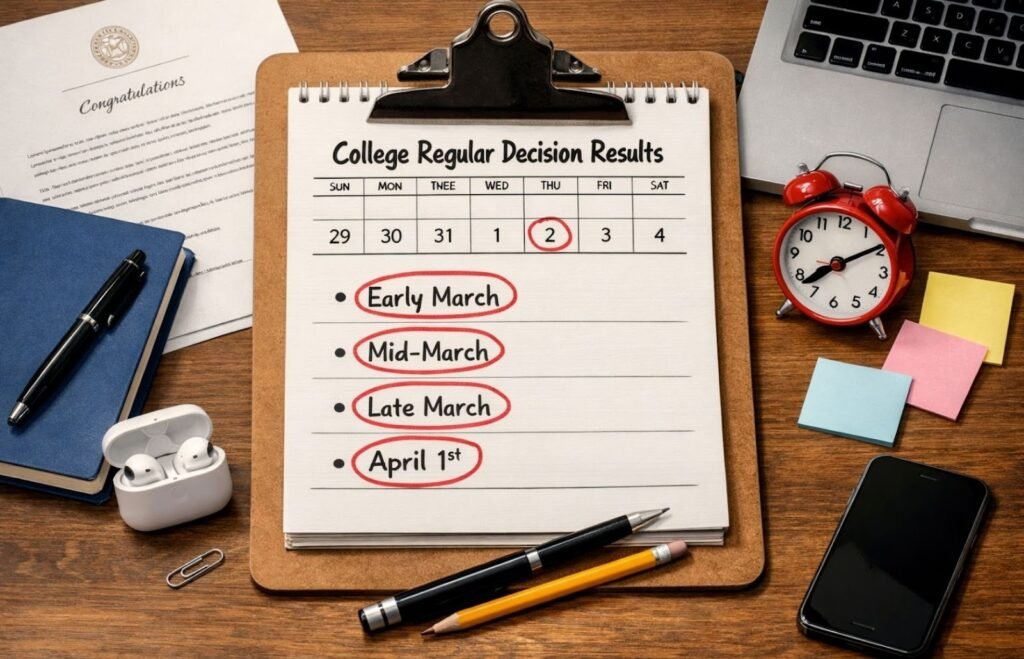
Ivy Day is when all Ivy League colleges release Regular Decision admissions results.
Decisions are usually announced on the same day for all eight universities.
For the Class of 2030, Ivy Day typically falls in late March 2026. Students receive acceptance, waitlist, or rejection decisions at this time.
Admissions decisions are released online through applicant portals. Financial aid offers often follow shortly after or alongside decisions.
Key points students should know:
- All Ivy League decisions are released on the same day
- Outcomes include admit, waitlist, or deny
- Financial aid details may be released separately
- This marks the start of final college decision planning
Ivy Day represents a major milestone in the Ivy League admissions journey.
9. Financial Aid Award Notifications
📅 Late March–Early April 2026
Financial aid award notifications explain the funding offered to admitted students.
These notifications outline grants, scholarships, work-study, and expected family contribution.
For Regular Decision applicants, aid offers are typically released in late March to early April 2026. They usually follow shortly after Ivy Day decisions.
Each college provides a detailed breakdown of financial aid. Students and families must review these offers carefully.
Key points students should know:
- Aid packages vary by college
- Grants do not need to be repaid; loans do
- Offers may be appealed if circumstances have changed
- Comparing aid packages is essential before enrolling
Understanding financial aid awards helps families make informed enrollment decisions.
10. Enrollment Confirmation Deadline

📅 May 1, 2026
The enrollment confirmation deadline is the final step in the admissions process. It requires students to accept an offer of admission from a college formally.
For the Class of 2030, this deadline is May 1, 2026. Students must confirm enrollment and submit a deposit by this date.
Accepting one offer means declining all others. Missing the deadline can result in the loss of the admitted seat.
Key points students should know:
- May 1 is the national college decision deadline
- Only one college offer can be accepted
- Enrollment deposits are usually non-refundable
- Financial aid acceptance may also be required
Meeting the enrollment confirmation deadline secures a student’s place in the incoming class.
Creating Your College Application Timeline
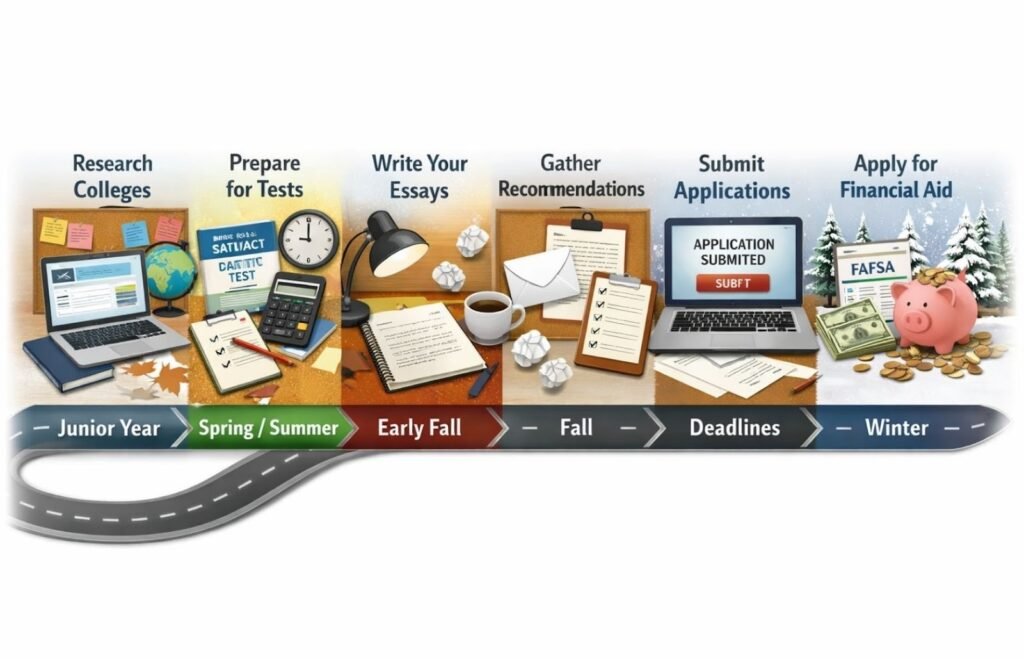
Staying on top of college application deadlines requires planning, structure, and the right tools.
Creating a clear timeline helps students manage multiple applications, financial aid forms, essays, and test dates without feeling overwhelmed.
An organized process reduces stress and improves submission quality.
Follow these steps to build an effective application timeline:
- Create a master calendar: Use one central calendar to track all college application deadlines, financial aid deadlines, scholarship dates, and standardized test dates. Keeping everything in one place helps prevent missed submissions and confusion.
- Break down each application into smaller tasks: Instead of listing broad goals like “Complete application,” break tasks into specific actions such as drafting the personal statement, writing supplemental essays, and requesting letters of recommendation. This makes the workload easier to manage.
- Prioritize tasks by deadline: Focus first on applications with the earliest deadlines. Prioritizing tasks ensures essential components are completed on time and reduces last-minute pressure.
- Set personal deadlines ahead of official ones: Give yourself internal deadlines well before the actual submission dates. This buffer allows time for revisions, document collection, and handling of unexpected issues such as technical errors.
Helpful tools and resources to stay organized:
- Application platforms: Use the Common App or Coalition Application to apply to multiple colleges and store core materials efficiently.
- Spreadsheets: Track colleges, deadlines, required documents, essay prompts, and application status using tools like Google Sheets or Excel.
- Cloud storage: Organize essays, financial aid forms, and test scores using Google Drive or Dropbox with folders for each college.
- Task management tools: Use tools like Trello or Asana to visually track progress with lists such as “To-Do,” “In Progress,” and “Complete.”
Building a structured timeline with these steps helps students stay organized, confident, and in control throughout the college application process.
The Importance of Meeting Application Deadlines
Meeting college application deadlines is one of the most critical factors in the admissions process.
Even highly qualified students can lose their chances simply by missing a deadline or submitting incomplete materials.
Selective universities, including Ivy League colleges, follow strict timelines, and late submissions are rarely considered, regardless of academic strength.
Submitting applications on time ensures that every component of the student’s profile is reviewed as intended.
Admissions committees evaluate thousands of applications, and deadlines help maintain fairness and structure in the process.
Missing a deadline can result in automatic disqualification, delayed review, or reduced access to financial aid and scholarships.
Meeting deadlines also allows students to submit stronger, more thoughtful applications. Rushing essays or documents at the last minute often leads to avoidable mistakes, weaker storytelling, and missed opportunities to showcase achievements.
Planning and respecting deadlines helps reduce stress and improve overall application quality.
Why meeting application deadlines matters:
- Prevents applications from being marked incomplete or rejected
- Ensures full consideration by admissions committees
- Protects eligibility for financial aid and scholarships
- Allows time for careful essay revisions and proofreading
- Reduces stress and last-minute errors
- Demonstrates responsibility and readiness for college-level expectations
Staying on top of application deadlines is not just about submitting on time; it is about maximizing opportunities and presenting the strongest possible application.
What to Do If You Miss a College Application Deadline?

Missing a college application deadline can feel stressful, but it does not always mean all options are lost.
Acting quickly and understanding your alternatives can help you recover and move forward.
Steps to take if you miss a deadline:
- Check if the college allows late submissions or has a grace period
- Contact the admissions office politely to explain the situation
- Look for schools with later deadlines or rolling admissions
- Consider applying in the next admissions cycle if necessary
- Use the experience to plan earlier and avoid future deadline issues
While missing a deadline can limit options, staying calm and taking proactive steps can help you find the best possible path forward.
How Essai Helps with Ivy League College Deadlines?

Managing Ivy League College Deadlines can be overwhelming due to multiple applications, strict timelines, and separate financial aid requirements.
Essai helps students stay ahead of deadlines with a structured, strategy-first approach that eliminates guesswork and last-minute stress.
How Essai supports students:
- Creates a personalized Ivy League application timeline based on target colleges
- Tracks all key deadlines, including applications, recommendations, CSS Profile, and FAFSA
- Guides students on Early Decision, Early Action, and Regular Decision strategies
- Ensures essays, supplements, and documents are completed well before deadlines
- Monitors recommendation submissions and follow-ups
- Supports students through financial aid timelines and post-acceptance deadlines
With Essai, students don’t just meet Ivy League College Deadlines; they approach them with clarity, confidence, and a well-planned strategy.
Conclusion
Ivy League College Deadlines play a defining role in the admissions process, often determining whether even the strongest applications are fully considered.
From application submissions and recommendations to financial aid forms and enrollment confirmations, every deadline carries weight and requires careful planning.
Missing or misunderstanding a single date can undo months or years of academic effort.
Approaching Ivy League admissions with a clear timeline, disciplined organization, and early preparation allows students to submit thoughtful, complete, and competitive applications.
With structured guidance and deadline-focused planning, students can move through the process with confidence rather than uncertainty.
Staying ahead of Ivy League College Deadlines is not just about being on time; it is about giving yourself the best possible chance to succeed.
FAQs
Q. When do Ivy League College Deadlines start for 2026 admissions?
A: Most Ivy League colleges’ Deadlines begin as early as November 1, 2025, for Early Decision and Early Action applicants.
Q. Are Ivy League College Deadlines the same for all universities?
A: No. Each Ivy League university sets its own Deadlines, especially for Regular Decision and financial aid.
Q. What happens if I miss an Ivy League College Deadline?
A: Late applications are usually not reviewed. Missing deadlines can result in automatic rejection.