
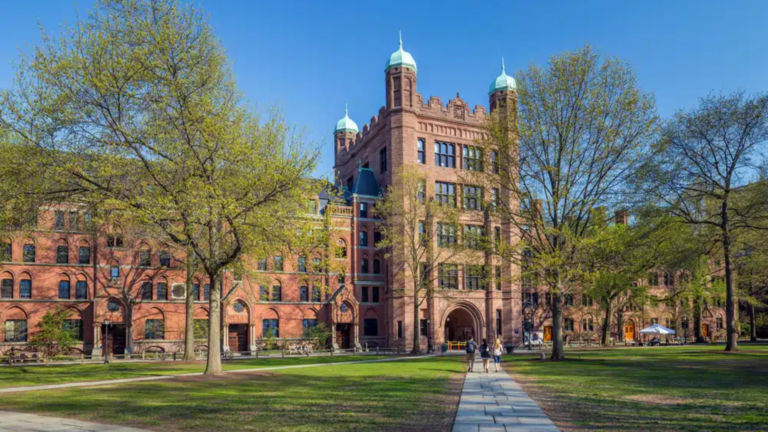
Yale is designed to produce a particular kind of question. Not the question you ask to pass an exam, but the kind that keeps you up at night the kind that connects a passage from Plato’s Republic to a current public policy debate, or finds the relationship between a musical composition and a mathematical theorem.
This is not accidental. It is the direct result of an educational philosophy that Yale has refined for over three centuries, and that remains, in 2026, one of the most thoughtfully constructed undergraduate experiences in the world.
For ambitious students anywhere in the world considering a US university application, understanding what Yale actually offers is not just useful for admissions strategy. It is useful for working out whether Yale is genuinely the right fit, which, for the right kind of student, it absolutely is.
A Philosophy Built on Breadth, Not Just Depth

Yale College offers a liberal arts education that aims to cultivate a broadly informed, highly disciplined intellect without specifying in advance how that intellect will be used. The College does not seek primarily to train students in the particulars of a given career.
Instead, its main goal is to instill knowledge and skills that students can bring to bear in whatever work they eventually choose.
This is a meaningful distinction. Most universities, even excellent ones, are structured around preparing students for specific professional outcomes. Yale’s model is different.
It treats college as a phase of exploration, a place to exercise curiosity, and an opportunity to discover new interests and abilities.
The idea of the liberal arts originates in fourth-century Athens when Socrates and his interlocutors discussed the necessary curriculum for citizens of the Republic, a tradition that Yale has carried forward with remarkable continuity and that now underpins roughly 2,000 courses across 80 majors.
When you leave Yale, you will not only have acquired a trained mind, broadened knowledge, and a greater sense of citizenship, but also a deeper understanding of the continuing joy of disciplined learning.
That is what the Dean of Yale College writes in the 2026-2027 Yale College Programs of Study, and it is not hyperbole. It reflects a genuine institutional commitment to the idea that education’s purpose is not just employment but formation.
Directed Studies: The Most Prestigious Freshman Programme in the United States
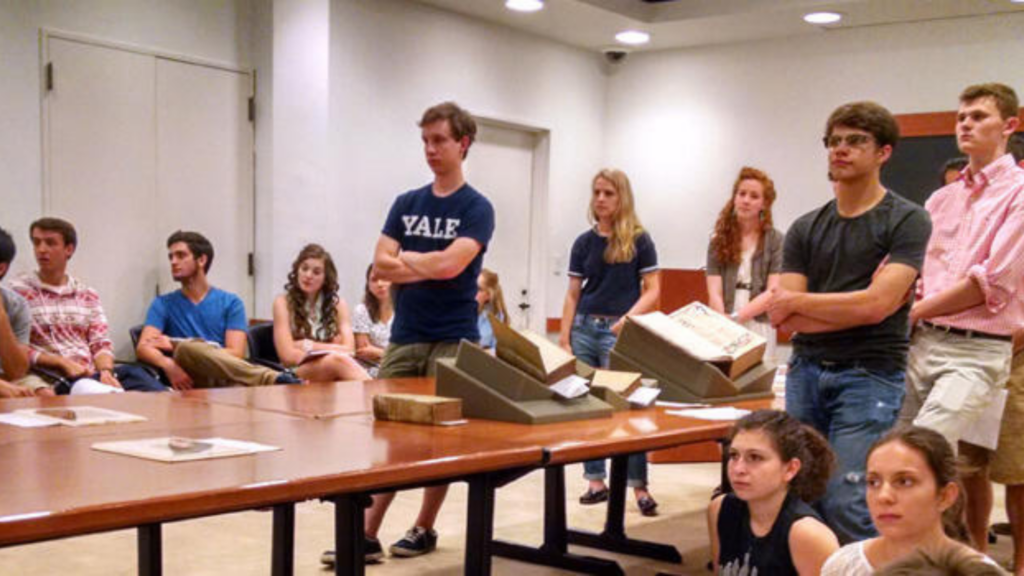
If one feature of Yale’s undergraduate education sets it apart most visibly from every other university in the world, it is Directed Studies. Directed Studies is the most prestigious freshman programme in the United States, and approximately ten percent of Yale’s first-year class is admitted to it each year.
The programme consists of three integrated full-year courses in Literature, Philosophy, and Historical and Political Thought, an interdisciplinary introduction to influential texts that have shaped Western and Near Eastern traditions, spanning from Ancient Mediterranean cultures to the early twentieth century.
Seminars in Directed Studies have a maximum of fifteen students and are led by Yale faculty, providing an unusually intimate intellectual environment from the very first weeks of university.
What makes Directed Studies genuinely remarkable is not its prestige, but its function. DS students assimilate course content across Literature, Philosophy, and Historical and Political Thought, but they also learn effective reading, writing, and reasoning skills that are invaluable for all further study at Yale.
The three DS courses are extraordinarily broad across time and across disciplines, combining the special subjects of many traditional departments in a way that opens rather than reduces future course options.
If you want to leverage your Yale education to change the world, DS is the place to start.
Students participating in DS become members of a close-knit and supportive intellectual cohort that endures well beyond the end of the first year, and DS students are recognised as leaders by their peers, teachers, and faculty in every subsequent course they take.
The Residential College System Community Built Into the Architecture
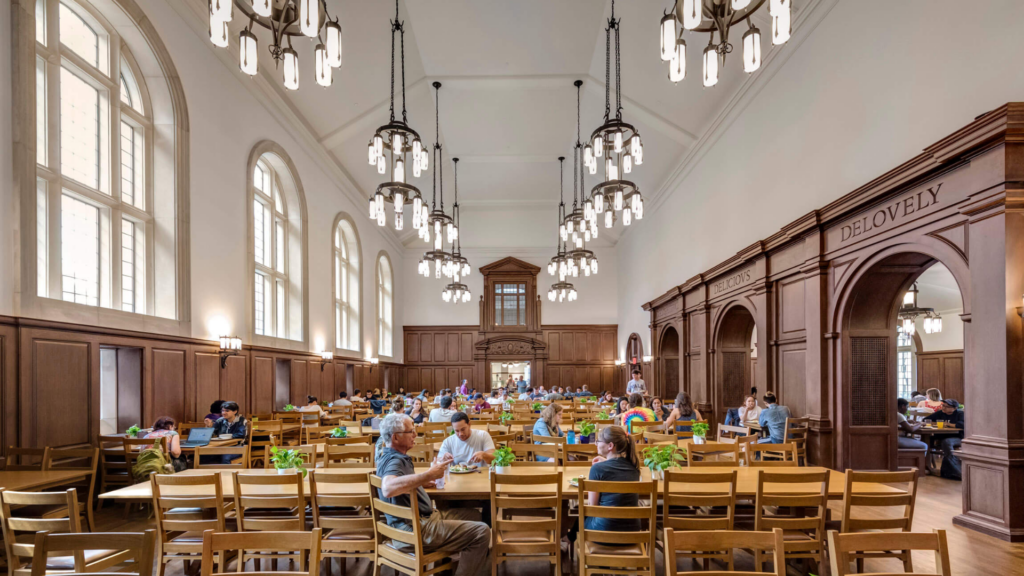
Yale’s residential college system is one of the most distinctive features of campus life, and most universities in the world have never attempted to replicate it. Yale operates fourteen residential colleges, each a self-contained community with its own dining hall, library, courtyard, and culture, and every undergraduate student belongs to one from the moment they arrive.
In many ways, friendship defines the Yale experience. One student puts it directly: it is about the people, not the prestige. The residential college system makes this possible at scale.
Rather than a single campus of thousands of students where community is left to chance, Yale creates fourteen overlapping communities of a few hundred students each, within which smaller academic, social, and artistic connections form naturally and sustainably.
Each residential college also hosts its own seminar programme, student committees, and writer-in-residence appointments, extending the academic life of the college beyond the classroom.
Students may enrol in up to four college seminars during their Yale career, proposed and taught in the intimate setting of their own college community. This structure means that intellectual life and social life at Yale are genuinely integrated in a way that is architecturally and institutionally designed, not just hoped for.
The Arts Are Not an Extracurricular; They Are Part of the Education

Yale takes the arts more seriously than almost any research university in the world. The David Geffen School of Drama at Yale is the number-one drama school in the United States, with alumni including Meryl Streep, Lupita Nyong’o, and Paul Newman.
Thanks to a generous donation from the David Geffen Foundation, all students in degree and certificate programmes at the Geffen School receive full tuition scholarships, with international students eligible for need-based financial aid for living expenses.
The Yale School of Music operates on the same principle of radical generosity. Thanks to a gift from Stephen and Denise Adams, all students admitted to the School of Music receive a full tuition award and fellowship.
For musicians and artists who want to pursue their craft at the highest level without the financial burden that most conservatory programmes impose, Yale’s model is genuinely without parallel.
For undergraduates, having these institutions on the same campus transforms what an education can include. A student studying economics can attend a Yale School of Drama production that is the best of its kind in the country.
A computer science major can take a music theory seminar taught by faculty who are themselves internationally recognised composers. The arts at Yale are not an afterthought to the academic programme. They are part of what makes it whole.
Financial Aid That Makes It Genuinely Accessible

Yale’s sticker price is significant. Tuition for the 2025-2026 academic year is $65,000, and after adding housing, dining, books, and personal expenses, the total cost of attendance reaches approximately $87,000 annually.
But Yale’s financial aid model is designed to ensure that the cost does not determine who can attend.
Yale is committed to admitting all qualified applicants regardless of financial need and supports students through a fully need-based financial aid system. A Yale scholarship is a grant awarded to recipients based purely on their demonstrated financial need, not on merit.
The range of Yale scholarships for international students is wide, from modest awards to significant aid over $70,000 per year. The average award is more than $50,000, reflecting Yale’s commitment to deep financial support for students who need it.
For Indian families exploring US university options, this matters enormously. Yale does not reduce the quality of education it offers based on a family’s financial position, and it does not expect international students to navigate a different or less generous aid system.
The same need-blind admissions philosophy that applies domestically shapes how Yale approaches financial aid for students from every country.
What This Means for Your Application
Yale’s acceptance rate for the Class of 2029 stood at approximately 3.7 percent, making it one of the most selective undergraduate admissions processes in the world. Yale offers two application deadlines: Restrictive Early Action with a November 1 deadline and decisions in December, and Regular Decision with a January 2 deadline.
The acceptance rate for Restrictive Early Action is meaningfully higher than for Regular Decision, and if Yale is a genuine first choice, applying early is a strategically sound decision.
The element of an application that most sets students apart at Yale is the essay. Yale requires a Common App Personal Statement alongside three Yale-specific supplemental essays of 200-250 words each. These shorter essays are not opportunities for students to repeat their resume.
They are opportunities to demonstrate precisely the kind of intellectual curiosity, cross-disciplinary thinking, and genuine character that Yale’s liberal arts model is designed to develop. Yale admissions officers read for authenticity and ideas, not polish alone.
For students who love ideas across disciplines, who read widely, who participate in the arts and sciences with equal enthusiasm, and who want an education that treats them as citizens of the world rather than candidates for a specific job, Yale is one of the most genuinely suited environments on earth.
At Essai, we help students understand not just how to apply to Yale, but whether Yale is genuinely the right match for who they are and where they want to go.
From profile building in Grade 10 to application essays that show the intellectual depth Yale looks for, our team has helped students gain admission to some of the world’s most selective institutions.
Visit essai.in/consult to start building the application that gives you the best possible chance at the education you deserve.